Greetings, fellow castaways. I apologize for the late post this week. Between varsity softball and varsity track, our house is kept busy as of late, and I will be supporting my children before I sit down to write.
I was 23 years old when I came to know God as more than just a religion. Through a series of occurrences that could only be explained by the supernatural, I was changed into a new and wholly different person.
Now, as a man of logic and proof, there remained a huge list of questions about why and how I came to this new place in my life. After all, I was a devout agnostic, if there could ever be one. I had reasoned to myself that there was a God, because throughout my life, there were episodes where He continually showed Himself as a real entity, out there, beyond my knowing. And suddenly here He was, real and close and personal.
The biggest question of all is encompassed in the truth behind the single most pivotal moment in the history of Humankind: the resurrection from the dead of the man Jesus of Nazareth. Here, this week, I want to just take a moment to address the evidence of this event, and how it was that I came to believe the biblical account as passed down by the men who dictated the Four Gospel records.
The first popular point of contention pushed by the doubters is that Jesus never existed as a person. They say that all accounts of his existence were written by Christians, and by reason of their agenda being a conflict of interest, they couldn't be counted upon to be reliable witnesses.
Now, I'm not even going to go into his origins. What we're talking about is the evidence placed forth that will tell us whether or not, with REASONABLE ACCURACY, there was such a man as Jesus of Nazareth who was crucified on the 14th of Nisan in or about AD33.
For this first point, we turn to two men: Flavius Josephus and Cornelius Tacitus. Josephus was a Jewish historian, and Tacitus was a Roman one. Neither of these men has any interest or desire to support these Christ-followers in any way, shape or form. In fact, their points of view are diametrically opposed to those members of this new cult.
Let's start with Tacitus, from his Annals. This is set up by the accusation by rumor that Nero ordered the burning of Rome:
Hence to suppress the rumor, he
falsely charged with the guilt, and punished Christians, who were hated for their enormities. Christus, the founder of the name, was
put to death by Pontius Pilate, procurator of Judea in the reign of Tiberius: but the pernicious superstition, repressed for a time
Broke out again, not only through Judea, where the mischief originated, but through the city of Rome also, where all things hideous and shameful from every part of the world find their center and become popular.
The thing we need to remember here is that Tacitus was a Roman citizen, of the empire that brought high culture to the world. Not everyone in the world at that time was a superstitious, knuckle-dragging fool. These were the men who refined mathematics and philosophy, established law and administrative practices that are still used today. For Tacitus to specifically mention the Crucifixion meant he had done his own research, and turned up the order from Pilate. He didn't speak as though the event was some vague rumor; he spoke with the authority of one who had established a fact. In addition, Tacitus lived in a period close enough to the events in question that he could speak with authority. he was born in AD56 and died in 117. He write Annals sometime between AD100 and 112, which was only about 70 to 80 years after Jesus was executed. That would be the equivalent of a news article about Audie Murphy being written by a journalist today. John the Apostle was still alive and serving out an exile on Patmos in AD100.
Titus Flavius Josephus was born in AD36 in Jerusalem, and named by his father Joseph ben Matityahu. That places him right in the heart of the scene, right after it happened, in the context of history. He originally fought against the Romans in an uprising, surrendering his forces in AD67. He was then transported as a hostage to Rome, where he later shifted allegiance to Rome, even being awarded a citizenship. He was a translator, and a recorder of Jewish history for Emperor Vespasian.
In AD93, Josephus published Antiquities of the Jews. He wrote about an incident involving some of these followers of Jesus:
(Regarding Ananias the Younger, serving as High Priest) Festus was now dead, and Albinus was still on the road. So he assembled a council of judges, and brought before it the brother of Jesus the so-called Christ, whose name was James, together with some others, and having accused them as law-breakers, he delivered them over to be stoned.
As said before, Josephus was no stranger to the controversy surrounding Jesus; he lived in Jerusalem and could not have escaped hearing about the commotion surrounding the man.
Now, I've been in conversation with some who told me flat out, "There is no way you can prove Jesus existed." Now, it's time to establish something: There's a difference between Evidence, and Proof. The kind of proof this person was asking for is scientific proof. In order to prove something scientifically, you have to reproduce it in a controlled environment. So, given that fixed standard, it's impossible to prove that there was ever such a person as Thomas Jefferson. Think about it. All we have are writings and paintings. Only in Tom's case, we have some bones in a coffin that someone said were his, but are they really? That was over two hundred years ago. Now we do have "anecdotal evidence" that Jefferson existed, dated from the time of his existence. We also have writings from several men from the first century who mention records of a man named Jesus, some of whom walked the earth with him. John wrote "We have seen his glory, the glory of the one and only Son, who came from the Father, full of grace and truth." (The Gospel of John, Chapter 1, verse 14).
Saul of Tarsus, also known as Paul, told King Agrippa and Festus the governor, "What I am saying is true and reasonable. The king is familiar with these things, and I can speak freely to him. I am convinced that none of this has escaped his notice, because it was not done in a corner. King Agrippa, do you believe the prophets? I know you do.” (The Acts of the Apostles, Chapter 26)
The wealth of evidence points squarely to the conclusion that it is more reasonable to believe there was a true historical man Jesus of Nazareth than not to. These are not the only contemporary records of his existence. By contemporary, I mean those accounts written within one hundred years of the persons/incidents in question. I just covered these four for lack of space, and there are plenty of books that discuss it in even more depth.
Some folks find it easier to believe Julius Caesar's writings are more accurate historical records than John's. Let's look at that: Caesar's work was written between 100BC and 44BC. The oldest existing copies date from 900AD, a thousand years later. Yet no one questions their authenticity. John wrote his gospel about 70AD. The oldest existing copies of his book date from 125AD, only fifty years later, and somehow, it's considered as less reliable. I'm thinking some folks don't have a problem with the evidence; they have a problem with their own agendas.
I'm convinced Jesus of Nazareth was a real man who walked the earth in the first century of our current calendar era. Next week, we'll continue the Question with the next event that led up to the single most pivotal moment in Human History.
Stay tuned; it's gonna get good.
Wednesday, April 23, 2014

Tuesday, April 15, 2014
DEFECTIVE!!!
Here's something I bet some of you don't know:
No part or component can be installed legally on an aircraft without the right paperwork that says it's approved for installation. That paperwork is called an FAA Form 8130-3. On that form, there's a block that gets filled in by the shop or factory that last had it. That block has only 5 acceptable entries: Tested, Inspected, Repaired, Overhauled, and New.
Part of our job is to find and remove Defective parts, and replace them with New, Inspected, Repaired, Tested, or Overhauled parts. It makes the plane safer, and everyone is happy.
I just saw an episode of Futurama where Bender the Robot realizes he was defective off the assembly line, and shouldn't even be. It was hilarious, but as is the case with most of Matt Groening's work, there was a touching undercurrent to the story as well. Bender calls the factory to tell them he's defective, and the factory sends out these robots to destroy him. Of course, at the last minute he gets away, and has no chance to confront the inspector who certified him off the line, the mysterious "Inspector 5."
In a perfect plane, defective parts are unacceptable. They need to be hunted down, removed, and replaced. Some people think the same thing about the world. Only instead of defective parts, they look for what they see as defective people. That list usually includes those who don't agree with them. So they see the crippled, the poor, the "morally questionable" and others as defective, and they, of course, have the right answer.
What they don't see, of course, is that they are defective themselves. They just can't help it. it's part of being human. But in the meantime, they do their best to convince those who've been deemed so, that it's God's fault that they're not right, imperfect, sinners. Defective.
Well, I'm not here this week to argue the value of defective people, and I'm also not here to explain why we're defective, every single one of us.
What I'm here to say this week, is that being defective isn't the end of the world. There are many defective people who didn't let it stand in the way of greatness. By now we all know Noah was a drunk, David was an adulterer, Paul was a murderer. Hemingway was heavy on drink, too. Kate Greenaway was depressive. George Washington, on order from the English Crown, decimated entire villages in the French-Indian war.
What many of us tend to do is to brand ourselves as Defective. I'm too fat. I'm too thin. I'm ugly. My hair is too thick. My hair is...not there anymore. I'm stupid. I'm not good enough. I can't.
Nothing makes me mad faster than someone who constantly berates themselves. Come on! You have been created by the Master of the Universe. Yes, human. Yes, imperfect. But the world beats you down enough. You don't need to pile on.
I heard it said once, that if we fall short, and refuse to forgive ourselves, we are making ourselves out to be a better judge than God. Here's the logic of that: God forgives. His word says he does. All we have to do is ask for it; that's the deal. So if he's willing to forgive us, and we are not willing to forgive ourselves, we're telling him he doesn't know what he's talking about.
So remember this: It's okay to be less than perfect, as long as you can say you're trying. It's okay to let yourself off the hook. It's okay to be human. Because that thing you consider so horrible about yourself, that thing that makes you defective? It isn't as bad as you think.
Remember, the rest of us are defective, too. We don't have room to judge anyone, least of all ourselves.
Have a great week, guys.
No part or component can be installed legally on an aircraft without the right paperwork that says it's approved for installation. That paperwork is called an FAA Form 8130-3. On that form, there's a block that gets filled in by the shop or factory that last had it. That block has only 5 acceptable entries: Tested, Inspected, Repaired, Overhauled, and New.
Part of our job is to find and remove Defective parts, and replace them with New, Inspected, Repaired, Tested, or Overhauled parts. It makes the plane safer, and everyone is happy.
I just saw an episode of Futurama where Bender the Robot realizes he was defective off the assembly line, and shouldn't even be. It was hilarious, but as is the case with most of Matt Groening's work, there was a touching undercurrent to the story as well. Bender calls the factory to tell them he's defective, and the factory sends out these robots to destroy him. Of course, at the last minute he gets away, and has no chance to confront the inspector who certified him off the line, the mysterious "Inspector 5."
In a perfect plane, defective parts are unacceptable. They need to be hunted down, removed, and replaced. Some people think the same thing about the world. Only instead of defective parts, they look for what they see as defective people. That list usually includes those who don't agree with them. So they see the crippled, the poor, the "morally questionable" and others as defective, and they, of course, have the right answer.
What they don't see, of course, is that they are defective themselves. They just can't help it. it's part of being human. But in the meantime, they do their best to convince those who've been deemed so, that it's God's fault that they're not right, imperfect, sinners. Defective.
Well, I'm not here this week to argue the value of defective people, and I'm also not here to explain why we're defective, every single one of us.
What I'm here to say this week, is that being defective isn't the end of the world. There are many defective people who didn't let it stand in the way of greatness. By now we all know Noah was a drunk, David was an adulterer, Paul was a murderer. Hemingway was heavy on drink, too. Kate Greenaway was depressive. George Washington, on order from the English Crown, decimated entire villages in the French-Indian war.
What many of us tend to do is to brand ourselves as Defective. I'm too fat. I'm too thin. I'm ugly. My hair is too thick. My hair is...not there anymore. I'm stupid. I'm not good enough. I can't.
Nothing makes me mad faster than someone who constantly berates themselves. Come on! You have been created by the Master of the Universe. Yes, human. Yes, imperfect. But the world beats you down enough. You don't need to pile on.
I heard it said once, that if we fall short, and refuse to forgive ourselves, we are making ourselves out to be a better judge than God. Here's the logic of that: God forgives. His word says he does. All we have to do is ask for it; that's the deal. So if he's willing to forgive us, and we are not willing to forgive ourselves, we're telling him he doesn't know what he's talking about.
So remember this: It's okay to be less than perfect, as long as you can say you're trying. It's okay to let yourself off the hook. It's okay to be human. Because that thing you consider so horrible about yourself, that thing that makes you defective? It isn't as bad as you think.
Remember, the rest of us are defective, too. We don't have room to judge anyone, least of all ourselves.
Have a great week, guys.
Sunday, April 6, 2014
Who the H*** Do I Think I Am?
Greetings and salutations, fellow castaways on the Distant Shores of our collective mind.
It's been three years since I started my blog, and I feel a need to let everyone know a few things about it.
First off: I was told I needed a blog, as a published writer. And the person who gave me that advice was 100% right. I do need a blog. But not necessarily for the reasons this person cited.
Second: I was told that my blog was a tool for selling books. I hedge a bit at that, because let's face it: we all get bombarded all day, every day, with someone else trying to sell us something. I don't know about you, but I am so "commercialed out," the last damned thing I want to do once a week is trip over someone else's commercial. So although I'd love people to read and enjoy my books (as many have), I think I'd rather not spam you guys, if that's all right. So my blog is NOT about selling books. Is that okay?
Once, I took a strong stance on a subject that was considered controversial. I was called out by one of my viewers (who for some reason chose to remain anonymous) who told me to shut up and sell books. No one was interested in what I had to say about this subject. Well, I'd like to think some folks were interested, and in fact some were. They were even willing to leave their names and be accountable for what they said on the web.
Third: I was told I had to have a single, consistent theme for my blog, and update it regularly. Wow. I don't think my brain works like that. I have things to say that don't necessarily link up. I like to share things that fascinate me, things about me, things that piss me off, things that make me happy. In short, I decided that this blog is about: ME. And all the crazy, outrageous, silly, insightful things that make me tick, and besides, I want to be the world's cheerleader, too.
Anyone who's been around here long enough knows I love to build people up in their faith, in themselves and in their God. I also want people to get to know the person behind all these weird books that seem to keep people up till the wee hours until they fall asleep with their kindle or a paperback on their chest.
So yeah, this page is how you, the reader, can get to know me, the writer, as a person, and hopefully as a friend. We don't have enough real friends, none of us.
Fourth: This is a place of discourse. CIVIL discourse. I welcome opinions that differ from mine, as long as they are shared in a civil and respectful manner.
Comments are welcome, too. Feel free to let me know what you think. But leave your name, so we know who you are. In addition, don't feel bad if your comment doesn't appear right away. I personally moderate each comment left. Not that I want to filter out everyone who disagrees with me, but to stifle SPAM comments, and trolls.
So maybe my books sales aren't reflective of the quality of my work. I should probably do more self-promotion. But aside from the occasional sneak-peek or special, I think this is a place best reserved for friends to gather around the coffee table, munch on pastries, and share each others' lives.
So welcome to my blog. Come on in, take off your shoes. Have a seat by the hearth, after you grab something from the coffee cart.
Let friendship begin.
It's been three years since I started my blog, and I feel a need to let everyone know a few things about it.
First off: I was told I needed a blog, as a published writer. And the person who gave me that advice was 100% right. I do need a blog. But not necessarily for the reasons this person cited.
Second: I was told that my blog was a tool for selling books. I hedge a bit at that, because let's face it: we all get bombarded all day, every day, with someone else trying to sell us something. I don't know about you, but I am so "commercialed out," the last damned thing I want to do once a week is trip over someone else's commercial. So although I'd love people to read and enjoy my books (as many have), I think I'd rather not spam you guys, if that's all right. So my blog is NOT about selling books. Is that okay?
Once, I took a strong stance on a subject that was considered controversial. I was called out by one of my viewers (who for some reason chose to remain anonymous) who told me to shut up and sell books. No one was interested in what I had to say about this subject. Well, I'd like to think some folks were interested, and in fact some were. They were even willing to leave their names and be accountable for what they said on the web.
Third: I was told I had to have a single, consistent theme for my blog, and update it regularly. Wow. I don't think my brain works like that. I have things to say that don't necessarily link up. I like to share things that fascinate me, things about me, things that piss me off, things that make me happy. In short, I decided that this blog is about: ME. And all the crazy, outrageous, silly, insightful things that make me tick, and besides, I want to be the world's cheerleader, too.
Anyone who's been around here long enough knows I love to build people up in their faith, in themselves and in their God. I also want people to get to know the person behind all these weird books that seem to keep people up till the wee hours until they fall asleep with their kindle or a paperback on their chest.
So yeah, this page is how you, the reader, can get to know me, the writer, as a person, and hopefully as a friend. We don't have enough real friends, none of us.
Fourth: This is a place of discourse. CIVIL discourse. I welcome opinions that differ from mine, as long as they are shared in a civil and respectful manner.
Comments are welcome, too. Feel free to let me know what you think. But leave your name, so we know who you are. In addition, don't feel bad if your comment doesn't appear right away. I personally moderate each comment left. Not that I want to filter out everyone who disagrees with me, but to stifle SPAM comments, and trolls.
So maybe my books sales aren't reflective of the quality of my work. I should probably do more self-promotion. But aside from the occasional sneak-peek or special, I think this is a place best reserved for friends to gather around the coffee table, munch on pastries, and share each others' lives.
So welcome to my blog. Come on in, take off your shoes. Have a seat by the hearth, after you grab something from the coffee cart.
Let friendship begin.
Sunday, March 30, 2014
News
Greetings, fellow Castaways.
This week, I want to open with an announcement:
Beginning now, I'm offering merchandise for sale. I'll be setting the page up shortly. I'm starting with this:
 This is a 4" round sticker on standard paper, suitable for attaching to whatever turns you on, and is available for $2.00 each. email me at cyrus.keith@yahoo.com and I'll tell you how to order yours.
Oh, and I want to let you all know it was printed through my friends at Streamline Design: http://www.streamlinedesign.com/
I'm contemplating the tee shirt idea, but I'm going to have to see a significant demand before I invest in inventory. For now, we'll keep the stickers available. If anyone has other ideas, I'm open to suggestions.
This week is also a quick reminder that my third novel Critical Mass is coming out in paperback this year. I don't have a release date yet, but as soon as I know anything, I will pass that on to you. As before, all my books are available in all electronic formats as well. Click on any of the buy links on the My Books page to find out more. (If you're reading my blog, and haven't read any of my books yet, I'd like to ask why not? I think you'll like them ;-) )
I'm still at work on my latest Work In Progress, and my plan is for it to go to a different publisher. Here's why: I'm perfectly happy with my current publisher, MuseItUp Publishing, headed by the industry's most indestructible powerhouse Lea Schizas. All my NADIA Project books will be submitted to MuseItUp, and I'm proud to do so. But I'm following Lea's own advice about putting all my eggs in one basket, and for my current WIP, I'm going to market it back around some other houses.
So it's going to be back to the Round Robin of submissions and rejections, with one major exception: This time, I have several previous publishing credits, including an industry-sanctioned award. I guess in some ways, I'm not looking forward to the mill, but I have the previous experience to draw on, and the tough skin I've developed to get me through it again.
We'll just see how things go. I want to get done with Tempus Fugitive and have it ready for submission by the end of the year.
Feel free to nag me.
I'll see you all next week.
This week, I want to open with an announcement:
Beginning now, I'm offering merchandise for sale. I'll be setting the page up shortly. I'm starting with this:
Oh, and I want to let you all know it was printed through my friends at Streamline Design: http://www.streamlinedesign.com/
I'm contemplating the tee shirt idea, but I'm going to have to see a significant demand before I invest in inventory. For now, we'll keep the stickers available. If anyone has other ideas, I'm open to suggestions.
This week is also a quick reminder that my third novel Critical Mass is coming out in paperback this year. I don't have a release date yet, but as soon as I know anything, I will pass that on to you. As before, all my books are available in all electronic formats as well. Click on any of the buy links on the My Books page to find out more. (If you're reading my blog, and haven't read any of my books yet, I'd like to ask why not? I think you'll like them ;-) )
I'm still at work on my latest Work In Progress, and my plan is for it to go to a different publisher. Here's why: I'm perfectly happy with my current publisher, MuseItUp Publishing, headed by the industry's most indestructible powerhouse Lea Schizas. All my NADIA Project books will be submitted to MuseItUp, and I'm proud to do so. But I'm following Lea's own advice about putting all my eggs in one basket, and for my current WIP, I'm going to market it back around some other houses.
So it's going to be back to the Round Robin of submissions and rejections, with one major exception: This time, I have several previous publishing credits, including an industry-sanctioned award. I guess in some ways, I'm not looking forward to the mill, but I have the previous experience to draw on, and the tough skin I've developed to get me through it again.
We'll just see how things go. I want to get done with Tempus Fugitive and have it ready for submission by the end of the year.
Feel free to nag me.
I'll see you all next week.
Saturday, March 22, 2014
A Giveaway, and cool stuff!
Greetings, fellow castaways. My apologies for missing last week's post; life got in the way, as life is wont to do. Most of the time, I get in my weekly howdies, but last Saturday....
Anyway, I have some cool stuff to give away, some announcements as well.

Anyway, I have some cool stuff to give away, some announcements as well.
FIRST, THE GIVEAWAY!
I have one Adult-Large Tee Shirt (designed by graphic artist Shannon Kenyon)to give to one lucky winner. If ya wanna win, ya gotta do this: Read carefully, and follow my exact instructions, or you can't be entered in the contest.
Leave a comment on my blog. Not on Facebook. Not on Twitter. Right here. Down at the bottom of this page, where it says, "comment." I promise, you will not get spammed through Blogger or by my page. Your comment will not appear right away. This is so I can moderate each one.
In that comment, leave me your name and an email address where you can be contacted. If you don't let me know how to get hold of you, you can't win.
A winner will be chosen at random from the comments left on this blog on Saturday the 29th of March, 2014. I will contact that person and make arrangements for getting their prize sent.
One other person will win a second prize: One pdf copy of their choice from among my published books
Up to four other people will win a four-inch round "Jenna Lives" sticker, handy for personalizing anything you want. (I tried uploading a jpeg, but Blogger doesn't like the file for some reason)
Which leads to my next announcement:
Soon, you'll be able to order NADIA Project merchandise! I'm doing a test run with stickers, and if there's enough interest in shirts, we'll be getting more. But an investment like that needs to be justified. Let me know if you're interested, okay?
Which leads to my next announcement (I'm just full of good news this week!):
My publisher, MuseItUp Publishing, has confirmed that Critical Mass, the third installment of my award-winning series of thrillers The NADIA Project, will be coming to paperback soon! I don't have an official release date yet, but as soon as I now, I will be passing it on to all of you.
To celebrate the announcement, I'm including here a free excerpt from Critical Mass:

Thanks for your time and attention this week. Enter my giveaway, and good luck!
Which leads to my next announcement:
Soon, you'll be able to order NADIA Project merchandise! I'm doing a test run with stickers, and if there's enough interest in shirts, we'll be getting more. But an investment like that needs to be justified. Let me know if you're interested, okay?
Which leads to my next announcement (I'm just full of good news this week!):
My publisher, MuseItUp Publishing, has confirmed that Critical Mass, the third installment of my award-winning series of thrillers The NADIA Project, will be coming to paperback soon! I don't have an official release date yet, but as soon as I now, I will be passing it on to all of you.
To celebrate the announcement, I'm including here a free excerpt from Critical Mass:
At Gate 47 on the A concourse, he waited another ten minutes. A wheelchair
approached him bearing a bundle of loose clothing in a wide-brimmed, veiled
hat. The woman, face obscured by the veil, croaked, “Jonathan, it’s been so
long. Give your grandma a hug.”
A chill slithered up Jon’s spine. He scanned the area. No one in the crowd
around them noticed, or paid any attention whatsoever. As he bent down, her
voice changed. It was Jenna, but she sounded strained, tight. She whispered
into his ear, “Get me the hell out of here, and if you aren’t straight with me,
I’ll make you suffer before I kill you.”
He whispered back, “Gee Grandma, you have such a way with words.” Grabbing
the handles of the wheelchair, he pushed it toward the main parking area. On
the way out, he mumbled, “Long time no see. I suppose I should ask how you’ve
been, but I honestly couldn’t care less.”
“Thanks for your concern,” she said. Her voice was so weak Jon had to
lean down just to hear. “We’ll take your car. I assume you’re still FBI?”
As he pushed her along, he scanned the crowd. No one paid any undue
attention to them or changed direction as they passed. We’re not being followed. What’s wrong with this picture? “Actually,
no. I transferred to Air Force OSI after our little party at Twin Oaks. It
gives me even more super powers. So what have you been up to, Jenna? Conquer
any countries lately? Maybe torture a puppy or two?”
“God, Jon, you are such an ass. Now I suppose you’re going to try to
arrest me again?”
“That depends on you. Let’s just talk and see what happens from there.”
At his car, Jon unlocked the doors and waited on the driver’s side for
Jenna to get out of the chair and climb in. She just sat in the chair in her
disguise until he lost patience and came back around. He flipped the hat from
her head. “Okay, you can dump the old lady act—” He took in her disheveled
hair, the bruises and stitches on her head, her pale skin, and a hot wave of
shock washed over him, mixed with shame. He tried to think of something
appropriate to say, but all that come out was a gasp, followed by, “You look
like hell.”
“Way to compliment a lady, Agent Daniels.” Her face twisted in a grimace.
Her trembling hands clutched at the chair’s armrests. “I need a little help
getting up.”
Jon opened the passenger door and helped her in, and then got in and started
the engine. “Do you need a hospital?”
“No.” She grunted, settling into the seat. “But if you could line me up
with some painkillers and a place to lay low for a couple of days, I’ll be a
happier girl.”
“Would you at least tell me what happened to you?”
“Bad day at work. Just get me out of here, will you? No hospitals. Can’t
be seen in public.” Her voice was getting weaker; she was slurring her words.
Sweat beaded on her forehead. Jon swerved out into traffic, and she moaned with
the sudden movement. “You’ve a doctor workin’ with you. Take me there.”
“Okay, but I’ll have to blindfold you.”
“Don’ worry,” she slurred, “I’ll prolly be unconjus in few minuz. Zis
seat lay back?”
Jon stole a glance at her as he swung onto an entrance ramp. Her face
looked like school paste and her jaw hung open. She was breathing, for now, but
the last time he saw someone that pale, they didn’t live much longer. Dammit, girl, don’t you die on me. He
put his magnetic rotator light on the car’s roof and goosed the accelerator. As
soon as he hit a clear stretch on the interstate, he called Donna Hermsen. “Boss
Lady? We have a problem.”
“What is it now? Are you followed?”
He double-checked his mirrors. “Doesn’t seem to be an issue. Donna, I’ve
got Jenna Paine—”
“And who’s got who tied up this time?”
“Ha, ha. No, seriously. She’s hurt, bad. I think she just passed out.”
“What did you do to her?”
“I didn’t do anything, she came in like this.”
Donna’s voice was tight with tension. “Make sure it’s not a trick.”
“Oh, it’s no trick. She looks like hell.”
“Well, what’s wrong? Have you checked her out?”
“Hang on.” He pulled over. “Okay, what do I do?”
“Weren’t you a boy scout?”
“It’s been a long time, Donna. You’re a doctor—”
“A physiologist, not an MD. Hang on, Beth is here.”
Jon clipped his Bluetooth to his ear as he ran around the front of the
car and opened the passenger door.
Beth’s voice sounded in his earpiece. “Okay, what’s she look like?”
He felt her head. “Fishbelly white, her face is clammy. She’s got fresh
stitches on the side of her head and bruises all over the place.”
“Check her pupils—make sure they dilate evenly.”
Jenna didn’t even twitch when he thumbed her eyelids up. “They look the
same size. They react to light.”
“There has to be something else going on. Is she bleeding anywhere else?”
“Hell, I don’t know, she’s dressed up in a huge grandma sweater—” He saw
the stain on his car seat and cursed. “Beth, she’s bleeding. Hang on—” He
lifted the sweater and saw the dressing on her torso. “She’s got a huge bandage
on her waist, and it’s soaked through with blood.”
“Fresh, or clotted?”
“It’s soaking with fresh blood.”
“Dark or bright red?”
“It’s bright red.”
“How much is flowing?”
“It’s just seeping right now.”
“It’s an active bleed, but it’s not an artery. Okay, don’t peel it away,
but tell me what color is the skin around the edges of the dressing?”
“There’s some bruising, but not too bad.”
“Is the area hard and swollen?”
When he reached out to feel her side, Jenna grabbed his wrist. She looked
straight into his eyes. “Wha’ th’hell you doin’?”
“I’m seeing if you’ll survive a four-hour drive.”
“If I don’, I prolly d’serve it. Le’s go.”
Beth said, “Okay, she’s conscious. Listen—put more padding on top of that
dressing. Do you have any way to secure it, to put pressure on it? Don’t take
it off for anything. Donna, Hushi, and I are going to take off right now. We’ll
meet you at the Virginia
Jon hung up and took off his shirt. He packed it on
top of the blood-soaked dressing and secured it with his belt before pulling
Jenna’s sweater back down over it. Then he jumped back in and pulled out onto
the expressway.Thanks for your time and attention this week. Enter my giveaway, and good luck!
Saturday, March 8, 2014
Antimatter: What's the scoop?
I was a science major in school. My father fed that fascination with all things scientific, from my obsession with dinosaurs to my total failure in chemistry class. Hey, I said I was a science major; I didn't say I was all that and a bag of chips. But when I was four, I remember watching Fantasia on the big screen, sitting on my dad's lap, and naming every single dinosaur depicted in the segment Rite of Spring.
I also remember a speech in High School English class about the function and operation of a Breeder Reactor, and the sea of blank, confused stares that told me not another student had any idea what I just got done telling them. I had been so immersed in reading my dad's science books, I simply assumed that other kids just as smart as me had access to the same knowledge.
One of my beta readers put me in the same place when he who told me, "Don't assume we know what you're talking about. Put the cookies on the bottom shelf." I took that to heart when I was in the process of polishing and fixing my first novel Becoming NADIA. I had to run a fine line between explaining my science and boring the hell out of my readers.
So this week, I'm going to spend some time covering the science behind antimatter, featured in my series as the "weapon behind the weapon." This is the stuff I weeded out of the novel so it wouldn't get bogged down in the details and start sounding like a textbook written by an amateur.
So without further ado:
The modern concept of antimatter was conceived by French Physicist Paul Dirac back in 1928. His main philosophy was that an equation should "look beautiful" as well as function properly. Which, to this mathematics failure, seems odd. But as the language of most theoretical sciences is mathematics, I guess that's pretty deep. Anyway, he conceived this idea that all matter had an opposite material image, or "anti-matter."
 His theory was proven years later when someone using a monstrous device called a Super Collider actually confirmed its existence. It seems that antimatter is created as a by-product of a fission high-energy particle collision. In other words, if you take a substance and stick it to a target in a giant circle miles wide, and you slam it with a stream of sub-atomic particles accelerated by a magnetic field, some of the stuff that gets knocked loose actually changes it's electrical charge and becomes its opposite. It takes a helluva lot of energy to make antimatter, and if you don't catch it pretty damned quick, some nasty stuff happens.

Now, matter and antimatter are so the opposite of each other, that if they ever meet, they totally destroy each other. It's a process called annihilation, and when that happens, everything is converted to energy. A MASSIVE amount of energy. How much, you ask? Let's look at another great mind of the 20th Century, Albert Einstein.

Most people are familiar with the equation E=mc2. Almost nobody knows what it really means. What Einstein theorized was this: The amount of energy existing in a matter is equal to the mass of that matter times the speed of light, squared. The faster you slam something, the more of its energy gets released. In fact, the matter actually converts into energy. This was illustrated in graphic detail at Hiroshima and Nagasaki at the end of WWII.

I also remember a speech in High School English class about the function and operation of a Breeder Reactor, and the sea of blank, confused stares that told me not another student had any idea what I just got done telling them. I had been so immersed in reading my dad's science books, I simply assumed that other kids just as smart as me had access to the same knowledge.
One of my beta readers put me in the same place when he who told me, "Don't assume we know what you're talking about. Put the cookies on the bottom shelf." I took that to heart when I was in the process of polishing and fixing my first novel Becoming NADIA. I had to run a fine line between explaining my science and boring the hell out of my readers.
So this week, I'm going to spend some time covering the science behind antimatter, featured in my series as the "weapon behind the weapon." This is the stuff I weeded out of the novel so it wouldn't get bogged down in the details and start sounding like a textbook written by an amateur.
So without further ado:
The modern concept of antimatter was conceived by French Physicist Paul Dirac back in 1928. His main philosophy was that an equation should "look beautiful" as well as function properly. Which, to this mathematics failure, seems odd. But as the language of most theoretical sciences is mathematics, I guess that's pretty deep. Anyway, he conceived this idea that all matter had an opposite material image, or "anti-matter."
Now, matter and antimatter are so the opposite of each other, that if they ever meet, they totally destroy each other. It's a process called annihilation, and when that happens, everything is converted to energy. A MASSIVE amount of energy. How much, you ask? Let's look at another great mind of the 20th Century, Albert Einstein.
Most people are familiar with the equation E=mc2. Almost nobody knows what it really means. What Einstein theorized was this: The amount of energy existing in a matter is equal to the mass of that matter times the speed of light, squared. The faster you slam something, the more of its energy gets released. In fact, the matter actually converts into energy. This was illustrated in graphic detail at Hiroshima and Nagasaki at the end of WWII.
Now, let me be clear: Those were NOT antimatter reactions. But it showed what matter-to-energy conversion could do. And here's the awesome part. Only a fraction of a fraction of the matter in those bombs was converted to energy. Out of the 64 Kg (about 140 pounds) of Uranium used in the Hiroshima bomb, most of the U-235 never even underwent the atom-splitting process called fission. Actually, estimates made it at about 600 milligrams (a little more than a pound). Out of that amount, only one half of one milligram (.0005 grams) was converted into energy. So the bomb that destroyed Hiroshima and killed 60,000 people was only .0007% efficient.
In an antimatter reaction, 100% of the matter and 100% of the antimatter are converted, and all of their energy is released in the form of gamma radiation and high-speed neutrinos. In other words, there would be nothing left of either, and anything around the reaction would suffer severe damage as a result. Let's look at what would have happened had 100% of the Little Boy bomb had converted: The bomb as it was released the same energy as 13,000 tons of TNT. If that 64 kg was antimatter, the result would have been 2,749.44 Million tons of TNT. Probably enough to blow Japan in half. I found a neat little calculator at http://edwardmuller.com/right17.htm Go ahead, have fun.
I used antimatter in my book because that was how my original dream went, and I now I bent a few "rules" making it work for my story. I had a nuclear physicist argue with me that there was no way I could collect 48 grams of antimatter for Nadia's skeleton to hold, and he's probably right. But in my world, someone found a way to make it happen. That is where the "willing suspension of unbelief" comes into the equation.
Hopefully, no one ever finds a way to make an honest-to-God antimatter weapon. If you thought nuclear power was a Pandora's box, we ain't seen nothin' yet.
Nadia, you're one of a kind. And we can hope to God that's true.
Saturday, March 1, 2014
Heroes: Who Needs 'Em?
We all are familiar with heroes from our childhood. They were bigger than life, perfect in every way. I grew up with Matt Dillon, Batman, and Superman. Heroes had weak spots, but never in their characters. They were perfect examples of... well, heroes.
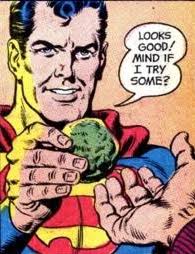



We used to cringe behind the couch when Lex Luthor hauled out that random sampling of Kryptonite and threw it in Superman's face, and the Man of Steel would collapse in a quivering, helpless heap and become just another guy in Spandex with his tighties on the outside. Embarrassing.
Psst- hey, Stupid! You're supposed to get all weak, not eat the stuff!
There, that's better. Dude, you gotta stay consistent with these things.
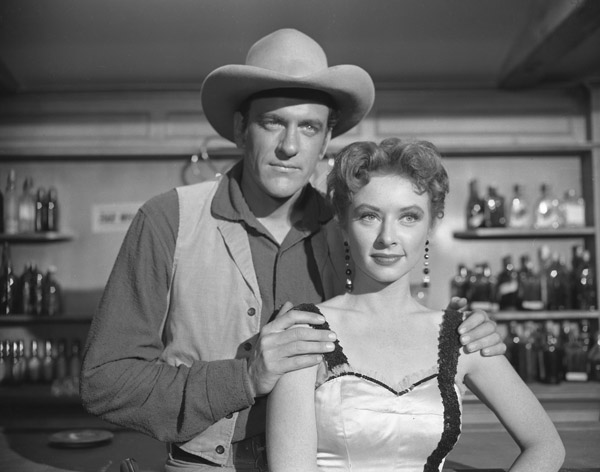
Now, as I was saying, we all looked u to Superman and those other heroes because, as heroes, they were pretty much impervious to character flaws. I mean, you never saw Clark Kent or Superman step over the line with Lois Lane. We all hoped Marshall Dillon and Miss Kitty were involved, but we never saw so much as a smooch. Or if there was, I missed that episode.
I mean, just look at that. Hands appropriately arrayed in a family-friendly way, the strong set in the jaw, Mr. Boy Scout all over.
Then the '70's hit, and Hollywood not only gave us heroes who were human, they gave us heroes who were bad guys. In short, they told us there were no heroes anymore. In Thunderbolt and Lightfoot, the characters are all about stealing a huge amount of money.
Another one was The Doberman Gang.
These movies are either bringing back memories, or bringing up lunch. Seriously, though, they're prime examples of the pendulum swinging the other way. I think it reached its opposite extreme sometime before 1980.
Then we started seeing heroes kind of come back, only sporting the scars of the '70's. The pendulum seemed to kind of center with films like Spacehunter, Molly Ringwald's debut in the trade
Okay, I can hear you now: "Where in the world does he come up with these oddball, obscure movies? Hey, I claim no normal upbringing. Most of you already know me if you've been following my latest interviews and blog posts, and there wasn't a whole lot of normal in my life. But it is what it is.
Anyway, back on task. Our heroes were heroes again, but they had flaws. They drank too much, or they were slobs, or they had a weakness for the opposite gender. In other words, they were human.
Which, I believe, was a good move. Because (Those taking notes, put a star here) I believe there are two types of heroes: Those who are born, and those who are made.
The first type is the one who naturally runs toward the screaming, the gunfire, the chaos. My youngest is like that. When all hell breaks loose, he is on the scene, whether he knows what to do or not. Prime example time.
When the kids were toddlers, my younger daughter got hold of a sharp knife from the table. I was doing dishes and it was waiting to be washed (What? You other men don't wash dishes once in a while? For shame!) Anyway, I turn around and there she is, holding this knife.
Now, as a dad, I need to not only get the knife from her, but I need her to understand why Daddy doesn't want her to wave a carving knife all over the kitchen. So I get it from her, and take her hand, just to show her the tip of the knife is sharp, when in comes a two-year-old blonde streak, and puts himself between me and my daughter. Seems he thought I was going to stab her. Holy cats. Lesson over. He's wrapped himself around her, screaming hysterically, and he has no idea why. He still does that. The best thing I can do for him is to teach him first aid and CPR. He's a natural born hero. I might as well teach him what to do once he gets there, than have him get in everyone's way.
Then there's the other hero. The one who's forged in the furnace of hardship. They're just normal folks, to whom running from the trouble is simply not an option. They're the mom who's kid is under the car. They are the teenaged boy whose neighbor in class is taken with a Grand Mal seizure. They are the young man or woman fresh from boot camp, in a far away land whose unit walks into an ambush.
In many cases, heroes are just people who are forced by circumstance to do heroic things because it's the only option that makes sense. You see it again and again on the news.
Which means heroes are regular folk. I look into the character of each of my heroes, and see how human they are. Jon treats NADIA like a piece of garbage for a while because he feels like his memories of Alicia are violated. Later on he falls into temptation with someone else. Not because he's an inherent ass. It's because he's a human male, and heroes who can overcome themselves as well as the bad guys, are the best heroes.
And God knows, we need more heroes today.
And God knows, we need more heroes today.
But those are just my own thoughts on the subject. What kind of heroes are your favorites, and why?
Sunday, February 23, 2014
The Ogre and the Princess
Orville came in, fresh from Memorial, just as we were ending our shift change briefing. The ambulance crew was just getting him settled in Room 326 with the help of some of the shift aides finishing their good deeds for the evening.
Laura, our shift nurse, took down the word from a tired second shift supervisor: "New transfer, total hip replacement. He's combative, disoriented, and PIA."
Oh, great. That's all we need. Another THR who's here to finish out their last days with the rest of the Skilled Ward's "sliders."
I'd been at Hope Terrace nursing home for over a year by them, and was starting to get hardened from the stream of old, infirm, and helpless who were relegated to the "Forget Me Ward" biding their time, slowly sliding downhill until one of us finds them cold and still on the 3AM bed check. Most of them never even had families who visited anymore.
We took over after the second shift crew went home for the night. Rosie gathered a fresh supply of bed linens for the first check and I joined her on rounds while Shirley filled fresh water pitchers and Linda grabbed the cuff, stethoscope and thermometer for TPR's. Rosie and I walked into 326 and said hello to Fred, Orville's roommate. Fred had been at Hope Terrace going on his twentieth year, after taking a drunken header off the town's one viaduct. He was... okay, in most ways. Fred was just highly disoriented most of the time, and it was all we could do to keep him from tottering off down Andrew Avenue, calling every male "Jack" and asking for a ride to get a beer. Yeah, Fred was all right.
Orville was another matter. After Rosie and I said our hellos, Rosie lifted Orville's covers to check for moisture or a mess, when Orville's hand shot out and grabbed her by the wrist. She cried out in pain and surprise and tried to pull back. But as weak as the old man's lower body was, he had incredible arm and hand strength. He uttered an incomprehensible stream of what could be interpreted as obscenities, and wrench Rosie's arm.
I reached over to rescue my partner, but Orville's other hand came up before I could dodge, an iron-hard fist that smashed into my mouth and sent me reeling across the room.
Before I could get back up, the rest of the crew charged in with a Posie jacket. It took all five of us to hold that old codger down so Laura could zap him with a dose of Thorazine strong enough to mellow out an angry buffalo, and then we trussed him up so he couldn't do anyone else any more harm.
That was our introduction to "Orville the Ogre," and nothing changed after that. A few weeks later, I transferred to second shift, going in at 3PM and working until 11. Bed checks were replaced with therapy sessions and baths, and if you think it's easy giving a chair shower to a retired farmer with a mean streak a mile wide and the upper body strength of a bull, you have another think coming.
We had a total of thirty-six patients in the "Forget Me Ward," and spending all the extra time and attention keeping everyone else away from The Ogre kept us all hopping. We kept him tied to his wheelchair, secured by a restraint strap to the handrail in the hall, whenever we weren't feeding him or wrestling through his physical therapy. He was constantly hallucinating. The rock by the flagpole in the yard was a pig. The nurse's station was the cattle trough. In his barely intelligible, mush-mouthed way, he let us all know in no uncertain terms how he saw us, and I don't recall the term "human" being used once. Anything or anyone who wandered within range of those long, powerful arms got a punch or a pinch, or whatever unpleasantness he could unleash against one so foolish.
And then it happened. Family Day. Or what passed for Family Day in the "Forget Me Ward." A family actually came to visit one of the patients. A young mom and dad, in their twenties, there to see Grandma Lettie. And with them came Little Cassie. Three years old, dressed in a fairy princess gown. The cutest little thing anyone there had ever seen, and precocious as only a toddler could be. She skipped down the hall from the main lobby, just ahead of her parents. Past the utility room where we rinsed soiled bed linens before bagging them up for the laundry, past the nurse's station where Nancy prepped the medicine cups for the 5 o'clock round, around the corner--
And straight into the waiting arms of the Ogre.
I was watching him, I swear I was. I was young, I was fast, and I was strong, but I couldn't outrun a three-year-old princess, and I had no chance to save her. Horrified, we all watched speechless as the old farmer swept her up and drew her into his lap.
And hugged her close as she threw her arms around his neck with a happy squeal.
Orville the Ogre's face transformed. Stress lines disappeared, replaced by laugh wrinkles. The hard, angry eyes opened wide. For the first time, we heard his soft, hoarse voice, clear and strong. "Hello, there, young lady. Who may I ask are you?"
"I'm Cassie, and you can be my grandpa," she replied, and grabbed his weathered face in both hands, planting a warm, sloppy kiss right on his nose.
Orville laughed.
And three nurses and eight aides let go a collective sigh of relief. I stepped forward, still shaking, to help Cassie down, but her parents stopped me. "It's okay," her father said. "We just lost my dad, and if Cassie wants another Grandpa, I'm fine with it."
Cassie and Orville talked for another five minutes together. She showed him how she could dance in her pretty pink dress, and Orville oohed and ahed over every twirl, every dip, and every little bow.
Finally, her mom and dad called her over, and Cassie gave Orville one last hug with a promise to come see her new grandpa again, soon. Then she skipped off to say hello to Great Grandma Lettie.
I came to get Orville later to help him to bed. I barely avoided the punch thrown at my head as I untied the strap from the handrail, and ignored his mush-mouthed verbal assault as we rolled down the hall.
As I secured his Posie for the night, he scowled up at me one last time for the day. "Ain' summon gonna feed that damned pig?"
I chuckled to myself on the way out the door. Cassie, you better come back soon.
Laura, our shift nurse, took down the word from a tired second shift supervisor: "New transfer, total hip replacement. He's combative, disoriented, and PIA."
Oh, great. That's all we need. Another THR who's here to finish out their last days with the rest of the Skilled Ward's "sliders."
I'd been at Hope Terrace nursing home for over a year by them, and was starting to get hardened from the stream of old, infirm, and helpless who were relegated to the "Forget Me Ward" biding their time, slowly sliding downhill until one of us finds them cold and still on the 3AM bed check. Most of them never even had families who visited anymore.
We took over after the second shift crew went home for the night. Rosie gathered a fresh supply of bed linens for the first check and I joined her on rounds while Shirley filled fresh water pitchers and Linda grabbed the cuff, stethoscope and thermometer for TPR's. Rosie and I walked into 326 and said hello to Fred, Orville's roommate. Fred had been at Hope Terrace going on his twentieth year, after taking a drunken header off the town's one viaduct. He was... okay, in most ways. Fred was just highly disoriented most of the time, and it was all we could do to keep him from tottering off down Andrew Avenue, calling every male "Jack" and asking for a ride to get a beer. Yeah, Fred was all right.
Orville was another matter. After Rosie and I said our hellos, Rosie lifted Orville's covers to check for moisture or a mess, when Orville's hand shot out and grabbed her by the wrist. She cried out in pain and surprise and tried to pull back. But as weak as the old man's lower body was, he had incredible arm and hand strength. He uttered an incomprehensible stream of what could be interpreted as obscenities, and wrench Rosie's arm.
I reached over to rescue my partner, but Orville's other hand came up before I could dodge, an iron-hard fist that smashed into my mouth and sent me reeling across the room.
Before I could get back up, the rest of the crew charged in with a Posie jacket. It took all five of us to hold that old codger down so Laura could zap him with a dose of Thorazine strong enough to mellow out an angry buffalo, and then we trussed him up so he couldn't do anyone else any more harm.
That was our introduction to "Orville the Ogre," and nothing changed after that. A few weeks later, I transferred to second shift, going in at 3PM and working until 11. Bed checks were replaced with therapy sessions and baths, and if you think it's easy giving a chair shower to a retired farmer with a mean streak a mile wide and the upper body strength of a bull, you have another think coming.
We had a total of thirty-six patients in the "Forget Me Ward," and spending all the extra time and attention keeping everyone else away from The Ogre kept us all hopping. We kept him tied to his wheelchair, secured by a restraint strap to the handrail in the hall, whenever we weren't feeding him or wrestling through his physical therapy. He was constantly hallucinating. The rock by the flagpole in the yard was a pig. The nurse's station was the cattle trough. In his barely intelligible, mush-mouthed way, he let us all know in no uncertain terms how he saw us, and I don't recall the term "human" being used once. Anything or anyone who wandered within range of those long, powerful arms got a punch or a pinch, or whatever unpleasantness he could unleash against one so foolish.
And then it happened. Family Day. Or what passed for Family Day in the "Forget Me Ward." A family actually came to visit one of the patients. A young mom and dad, in their twenties, there to see Grandma Lettie. And with them came Little Cassie. Three years old, dressed in a fairy princess gown. The cutest little thing anyone there had ever seen, and precocious as only a toddler could be. She skipped down the hall from the main lobby, just ahead of her parents. Past the utility room where we rinsed soiled bed linens before bagging them up for the laundry, past the nurse's station where Nancy prepped the medicine cups for the 5 o'clock round, around the corner--
And straight into the waiting arms of the Ogre.
I was watching him, I swear I was. I was young, I was fast, and I was strong, but I couldn't outrun a three-year-old princess, and I had no chance to save her. Horrified, we all watched speechless as the old farmer swept her up and drew her into his lap.
And hugged her close as she threw her arms around his neck with a happy squeal.
Orville the Ogre's face transformed. Stress lines disappeared, replaced by laugh wrinkles. The hard, angry eyes opened wide. For the first time, we heard his soft, hoarse voice, clear and strong. "Hello, there, young lady. Who may I ask are you?"
"I'm Cassie, and you can be my grandpa," she replied, and grabbed his weathered face in both hands, planting a warm, sloppy kiss right on his nose.
Orville laughed.
And three nurses and eight aides let go a collective sigh of relief. I stepped forward, still shaking, to help Cassie down, but her parents stopped me. "It's okay," her father said. "We just lost my dad, and if Cassie wants another Grandpa, I'm fine with it."
Cassie and Orville talked for another five minutes together. She showed him how she could dance in her pretty pink dress, and Orville oohed and ahed over every twirl, every dip, and every little bow.
Finally, her mom and dad called her over, and Cassie gave Orville one last hug with a promise to come see her new grandpa again, soon. Then she skipped off to say hello to Great Grandma Lettie.
I came to get Orville later to help him to bed. I barely avoided the punch thrown at my head as I untied the strap from the handrail, and ignored his mush-mouthed verbal assault as we rolled down the hall.
As I secured his Posie for the night, he scowled up at me one last time for the day. "Ain' summon gonna feed that damned pig?"
I chuckled to myself on the way out the door. Cassie, you better come back soon.
Sunday, February 16, 2014
Simply Asking
Most people who know me know I'm not a proud man. God knows I haven't done much of which to be proud, in the grand scheme of things. I'm just a man. That being said, I have done some things that I thought were pretty cool.
I got to meet Jim Varney once. For those who aren't familiar, Jim's most famous character was Ernest P. Worrell, a most loveable klutz very high on my cool-people list.

I got to meet Jim Varney once. For those who aren't familiar, Jim's most famous character was Ernest P. Worrell, a most loveable klutz very high on my cool-people list.
Another thing I'm pretty proud of is my writing, not in a "Oh, look at me, I'm awesome!" kind of way but more in a "Hey, I came up with this cool story and some folks liked it enough to publish it" way. It even won an award. So I guess that's pretty cool.
Which brings me to the heart of my post this week: I'd really like it if you bought my books. I have four out now, and you can check them all out by clicking on my "My Books" page.
I'd love to write full-time, and from the feedback I've received on my work, folks enjoy it a lot. But getting published, even winning awards, are wholly different from getting the exposure I need to become a commercial success. After making the "1 per cent cut" to get published, now I find myself trying to out-shout a half-million other writers out there trying to sell their books as well, and I'm afraid I'm not one to "jump in the mud and wrestle with the pigs."
So what I'm asking for, is everyone who has read my work and likes it, please tell your friends, post on Facebook and Twitter, and just spread the word. For those who haven't dived into my books yet, or hasn't read them all, I'd sincerely appreciate it if you bought my work.
Based on other feedback, You'll like what you read.
Thanks for your time. We'll be back next week with another peek inside my head (Not too scary, I assure you.)
Sunday, February 9, 2014
Author Influence: David Weber
Greetings once again, fellow castaways.
This week, I want to talk about yet another of the writers who have had significant influence in my literary taste, and writing style.
Few of you may even be aware of David Weber, unless you're big military science fiction fans. Thos who are, know exactly what I'm talking about when I say the term "Honorverse."
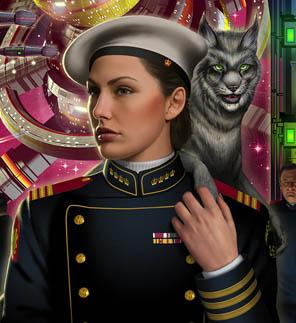
I was introduced to Mr. Weber through the first book in his series about Starship Captain Honor Harrington, aka who Janeway should have been.


This week, I want to talk about yet another of the writers who have had significant influence in my literary taste, and writing style.
Few of you may even be aware of David Weber, unless you're big military science fiction fans. Thos who are, know exactly what I'm talking about when I say the term "Honorverse."
I was introduced to Mr. Weber through the first book in his series about Starship Captain Honor Harrington, aka who Janeway should have been.
Okay, I can already hear the What? in your voices. "But Kate Janeway was... Janeway!"
Yes, and she was also the reason I quit watching the Star Trek franchise. I was just not attached to Capt. Janeway in the way that I was to others in the franchise. James T. Kirk was the "Photon Tordedo Kid," and Jean-Luc Picard was "Make it So." Yeah, they both had their appeal. JT was Mr. Action, always ready for the brawl, the phaser set to stun, the beautiful alien babe for whom to fall head over heels before the episode was over. Jean-Luc was Mr. Classy, ready to negotiate, able to talk his Shakespearian way out of just about any situation. But he always had a Klingon security chief and a first officer who could back up his talk with a big stick. Or bat'leth. Whatever it takes, right? Does anyone disagree with the statement "Worf kicks boo-tay?" Yeah, I thought not.
Okay, so fast forward a little bit to a bookstore where I was browsing one day for a something that would see me through a flight to Dallas. I find this book, On Basilisk Station, by David Weber. David Who? No, that's Doctor Who. I said David Weber. I'm looking for a good read, and this looks like it's at least less boring than Arthur C. Clarke.
And I am sucked into the Honorverse. Weber creates this whole new universe and makes people live in it. What really set it off for me was the way Weber manages this huge cast of main characters in a way that each one has their own distinct personality, and they all undergo their own transformation throughout the book (See last week's post. I'm big on transformation).
Anyway, here's Miss Honor Harrington, lady starship captain, and she isn't all "Oh, the aliens are revolting? Let's invite them over for tea and crumpets." She is a commander. One who issues orders and expects them to be carried out. One who isn't squeamish about launching huge amounts of whoopass against the enemy, whether it's a flight of nuclear missiles ship-to-ship, or a lightning flurry of punches hand-to-hand.
Plus, she's got a twenty-pound lil' buddy full of claws and temper who's adopted her as his own: Nimitz, the treecat.
Yeah, man. Together, they be azzo-looly bad.
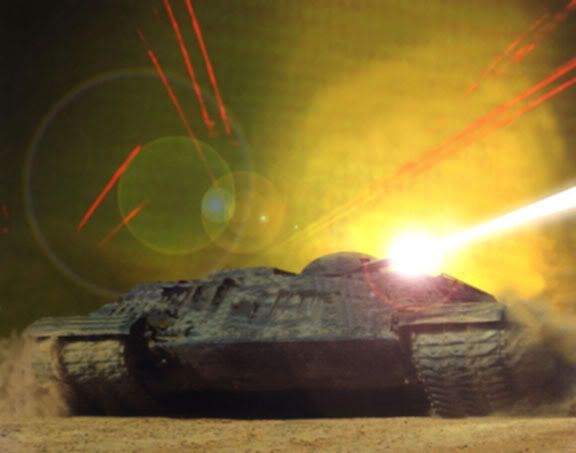
So I pore through Basilisk Station and start in on the rest of the series with great joy and aplomb. Then I discover Weber has written stories and books about my favorite AI's the Bolos. For hose who aren't up to speed, picture giant super-tank the size of a battleship, but on land, with immense firepower and the capacity to huck suns the size of basketballs at targets. That could be a bad day for someone. Oh, and did I mention Bolos are artificially intelligent as well?
I can tell you from reading many stories and books featuring Bolos, it takes a real talent to make a machine come to life convincingly. It's about as hard as writing humor, in fact. But Weber does it well. He's coordinated with John Ringo and other writers on various projects I've seen on the shelves. His voice is clean, his characters strong, his worlds are vivid, and his cultures are realistic. His action sequences will have you clutching the book with both hands, reading just one more page.
I think I've found my replacement for the late great Robert A. Heinlein.
Go to your favorite bookstore and check out David Weber today. You'll be glad you did.
Subscribe to:
Posts (Atom)