Friday, May 23, 2014

In Memoriam

Good weekend, fellow castaways.

This is Memorial Day Weekend in the United States, a weekend of remembrance for those who not only placed themselves in the breach for freedom around the world (and here at home), but also lost their lives in defending it.

My books are almost all dedicated in some small or large part in honoring those who serve in military, police, and fire-fighting professions, because I feel strongly that there is no sacrifice greater than one's own life, and these people deserve our respect, our honor, and our thanks, whether they lived through their terms of service or not.

In my novel Critical Mass, I wrote an exchange between two characters that stands out to me as a statement at the heart of what I believe to be the mission of our men and women of the armed services. Here, I post it again, for the benefit and in honor of those whose blood has watered our Tree of Liberty:

*****


Jimmy sat on the porch, watching the dull routine of the afternoon in front of him. The air commandos not on guard sat in the shade of Nadia’s lawn for lunch, weapons within easy reach. Those on duty at the detention shacks stood their watches, ever vigilant against any attempted breakout. The occasional fly or wasp buzzed by, its hypnotic drone lulling the man in the wooden chair. The pain med Watts had given him was just starting to do its work, and the ache in Jimmy’s shoulder was finally at a tolerable level. But on the downside, that warm, sleepy feeling Jimmy hated so much was just beginning to creep in and steal the rest of his afternoon.
The old warrior’s eyes had just drifted shut when the screen door opened with a protest of springs. The steps on the porch were light and favored one side. The soft scent in his nostrils confirmed the identity of the other party. “Afternoon, Miss Paine,” he mumbled through the painkiller’s haze. Another smell, cool and yeasty, wafted to him and he held out a hand to receive the cold bottle offered, his eyes still closed.
He couldn’t resist his own grin at the smile in her voice. “You must have sonar, you old coot.” The chair next to Jimmy’s creaked as Jenna settled into it. She clinked her bottle against his and took a pull.
The first swallow went down good, so he took a second before speaking. “How’s the leg?”
“Better, thanks. A little stiff, but I can work with it.”
“Good. Wouldn’t want ya to miss out just ’cause ya got a little hitch in your git-along.”
“Jimmy, I wouldn’t miss this if I had a whole leg off.”
“Big deal, eh?
Jenna looked out at the yard for a while before answering. “They lied to me. I don’t like being lied to.”
“But do you still believe in what they want? World unity and Kumbaya, and all that crap?”
Jenna tensed and clenched her jaw at the offhand remark. “When you kill someone, what do you feel?”
Jimmy bristled at the question. “You’re kidding, right?” Feel? How the hell am I supposed to feel? What kind of stupid question was that?
Jenna’s eyes narrowed with passion. “I want to know what you feel when you pull a trigger and put a bullet into another person, and let their life spill out. In whose name did you do it? Yours? Your country’s? And how did it solve anything?” She looked away. “That wasn’t even enough, was it? You had to teach others how to kill, too. For a border. An imaginary line on a map.”
She paused long enough to take a swallow. “So before you label someone’s beliefs as ‘crap,’ just think about what it felt like every time you killed someone for that imaginary line.”
The hair stood up on Jimmy’s neck. I swear, if you were a man, I’d pin your ears back… As it was, there was no way he was going to let that one go. It had been a long time since he needed to shift into sergeant mode, but the shift was as smooth as his last class of recruits.
“Young lady.” He struggled through gritted teeth. “I didn’t kill anyone for a line. I killed to save an idea. That idea was that free men should be able to defend themselves from oppression and tyranny and help other men to live free as well. Them poor jackwagons who stood in the way of that idea were the ones I killed. And to tell you the truth, I don’t feel a damned thing for ’em. That line on the map you’re goin’ on about is the line that says, ‘on this side you’re free to choose your own destiny.’ And I’ll spill as much blood as I have to to make sure it stays where it’s at.”
Jimmy sniffed and set his bottle on the small table between them. “Look at you, giving me the ‘baby-killer’ speech. How many bodies have you left behind? Why don’t you tell me what you felt when you stood over the bodies of the people you laid out for a lie?”
He gave her a cold smile then and watched the steel in her eyes melt away. “I’ll grant you, hon, you ain’t any worse than me. But you sure as hell ain’t any sight better.”
Leaning his chair back, he said, “Now, I’d be willin’ to bet your vision for this earth ain’t too far from mine. We just ended up thinkin’ about it from some different places.” He fixed her eyes again with his. “I do know if I’d have had a half-dozen more of you on my team, we’d have buried less of our boys and more of theirs.”
Jenna broke her gaze away and looked across the yard. In the silence that followed, Jimmy imagined he could hear the gears working inside her head. He just hoped that, whatever she decided in the end about whatever it was she was pondering, it wouldn’t affect her edge when it came down to brass knuckles and billy clubs.
Things were going to get bad enough as it was.

********

In my research for Becoming NADIA, I came across the inspiration for men like Jimmy DeBartolo. General William "Wild Bill" Dean commanded the first American force rushed to Korea after the North Korean Army stormed across the border into the South and laid siege to Taejon. General Dean's actions in leading his men from the front earned him a Congressional Medal of Honor, the highest award our country can give to its warriors. He was truly a soldier's soldier, and his men loved him as much as he loved them.
We must, in between the barbeques and picnics, take a moment to solemnly remember those who came back home in flag-draped coffins, whose lives were laid down not for glory, nor of pride, but for the concept that men should live free to make their own destinies. They weren't perfect, nor sinless, but they were the ones who stood in the breach for us. We owe them much more than we could possibly repay.

Saturday, May 3, 2014

The Question: Part Three the Final.

Greetings once again, O fellow castaways, and thanks again for your patience.

This week, the third and final part of The Question.

We need to start at one point, and this is critical to understand: NOTHING IS IMPOSSIBLE. That is just as important to understand  as the fact that "Old Marley was dead as a doornail." Anyone who tells you anything is impossible, knows nothing. Now, according to science, you say, some things are impossible. Iron does not float. You can't leap to the moon. Politicians always tell the truth. Dead men don't get up and live again. Science is fact, and science does not lie. Science, in fact by its nature, cannot lie.

Well, science cannot lie, and that's a fact. Science can't; scientists can, and do. But that's another issue. Back to science itself: C.S. Lewis (not a scientist, in acknowledgement to an argument put forth by one person in particular) said, "Science studies nature." Science has become very adept at predicting certain results and phenomena under certain conditions. For example, iron doesn't float. Well, that's not entirely true. Huge ships weighing several thousand tons are made of iron, and yet they float quite easily. Now, you say, that's cheating. Of course, if you distribute the mass of iron over a sufficient area such that it displaces a volume of water equal to its mass, it follows that iron can float. What about a cannonball?


 Here: https://www.youtube.com/watch?v=Rm5D47nG9k4 (I never said anything about what liquid in which the metal could float, now did I?)

What about the leap to the moon? Okay, give us rockets. That's one hell of a leap accelerator. The politician thing, no one has an answer for yet. I'll grant you that one.

Now, here's the other shoe: As I said above, Science studies nature. Science has become very adept at predicting certain results and phenomena under certain conditions. Those "conditions" also assume that no outside forces are acting upon the result. Hence the term "supernatural," as in "acting or behaving in a way that supersedes nature."

NOW we have a game-changer. We also have something that will NOT be duplicated in a controlled environment. Let's say we go bowling. You roll a ball for a perfect strike, right down the lane. Perfect trajectory, perfect momentum, perfect spin. Your release is flawless, and the ball rolls happily down the lane on its way. But then the lane attendant hits a button, and the bar comes down in front of the pins. The ball gets deflected by this outside force, introduced at someone else's caprice, and the strike never occurs. "Stop that!" you yell, and he nods and waves as the gate rises once more into its place above the lane. So you roll again, and just to be contrary, the attendant hits the button again. This "outside force" is unpredictable and uncontrollable, and has a direct effect on the outcome of the sequence of events.

Let's apply this factor to the question of miracles. Point 1.) Is it possible to prove a negative? In other words, can one say with certainty there is no God? Remember, I said, nothing is impossible. Therefore, by my own argument, it should be possible to prove the nonexistence of God, and I'm not talking philosophically. I mean in a real, scientific way.  I might say one could, and here's how: Star with a box of finite dimensions. Make it as big as you want. Let's start with 10 feet on a side. Now climb inside your box and close it off. You are now the only living thing in that box, right? Wrong. There is you, and all the bacteria and dust mites and whatnot that live on you, as well. But is God in that box with you? Maybe, maybe not. The only way to tell would be determined by your awareness of all things in that box, in every corner, on every side, at once. That way, God can't dodge away and hide somewhere behind a flap or something when your focus is somewhere else.

Now, make that box as big as you want: a mile on every side, a hundred miles, a thousand miles, a million light-years, it doesn't make a difference. The only way you could prove beyond doubt that there is no God, is to know and be aware of every single point in the universe simultaneously. That would make you omniscient and omnipresent. Why, to do that, you would have to be omnipotent Hey, aren't those the attributes of God? That could be some dangerous territory, Bruce Almighty.

So I think you owe me this: 1.) There is a possibility that there is a God. 2.) It follows, then, that if there is a God, that he could be omni-scient, omni-potent, and omni-present. 3.) It follows now that if there is a God, and  this God person is omni-omni-omni, then this He/She/It just may choose to act, within His/Her/Its range of ability and judgement, to act upon certain situations for His/Her/Its own benefit or the benefit of others, am I correct?

Now, back to The Question: Jesus was a Jewish man from Galilee in Israel who lived in the first century of our current calendar era. He was put to death by Pontias Pilate in Jerusalem and laid in a stone tomb, where the body hung out for a period of time exceeding twenty-four hours. I say that because there are some who choose to pick nits over how long he stayed in the tomb. Let's stick to basics, folks.

Anyway, a guard contingent of armed men (most likely Romans, because crucifixion was reserved for political crimes against Rome, and so this was an execution under Roman jurisdiction) was posted to make sure he stayed put. By many accounts, on a certain morning, the tomb burst open from inside, and Jesus walked out, not only alive, but thriving. Statements from the time indicate that he was seen by up to five hundred people at once.

Of course, these are the biblical accounts. Now doubters would say his followers overcame the guards and stole the body, and claimed he rose from the dead. Okay, let's go with that for a while. These are not stupid people. If a dozen bikers started saying Papa Guardado was raised from the dead, what would any reasonable person do? How about say, "Let's see him!" "Well," they say, "He's not here right now. He just left." Yeah, right. So how did the Twelve convince anyone with a lick of sense that Jesus came out alive from the tomb? No risen Jesus, no resurrection.

Again, if there was no resurrection, why did no one search for the body or question his followers? No man would die for what they know to be a lie, especially when plied by a Roman lector with a scourge for any period of time. Why would they do that? So obviously, we have a dozen or so men at least, who were convinced as sure as I breathe, that Jesus was raised from the dead. They began to preach that as truth, and the matter began to catch momentum. If you torture ten men, one of them will talk. That's a plain fact. And at this point, everyone in that area had a vested interest in making sure Jesus stayed dead. The Romans wanted peace in their conquered province. The Jews wanted the Romans to leave them alone so they could live their lives. All they had to do was break one of the followers to show them where the body was taken.

So, a group of men and women claim they saw Jesus back from the dead. No one interrogates them? No one says, "Hey, here's his body; they lie!" What credibility could they possibly have had to influence history in such a long-reaching way? How about a risen Jesus?

That's why I believe. Not just because someone told me. I looked into it myself, and my questions were answered to my satisfaction. This of course didn't just jump up and bite me out of the blue. There was a series of supernatural events that led up to my final inward knowledge of "Yes, that was the way it happened."

The last part of The Question is this: What do you do with knowledge like that? For a lot of folks, it's changed their lives. I know it's changed mine.

So I guess that's it. You can do two things here: believe it yourself, or not. You're free to choose, and that's the beauty of it all. I'm not your judge, any more than you are mine. Next week, we'll be on to another point of discussion. Till then, be well.

Thursday, May 1, 2014

The Question: Part Two

Greetings, O fellow travelers on Starship Earth. I apologize for the staggered spacing of my recent posts; I have one teenager in track, and another in softball, and I will not let my children go through a season without seeing their Dad on the sidelines, cheering them on.

Last week I opened the box.

I'm a man of faith, and a man of logic. They don't conflict, and we're working through the questions that used to bug me, until I found the answers. Because it isn't enough to believe. Understanding why one believes is crucial to a faith, otherwise you're just following a religion. And yes, there is a distinct difference between religion and faith.

Now, there does come a time when someone in whom I have implicit trust does ask me to just take their word for something. And if they have a proven record, I don't feel bad about simply believing. You're not an idiot for taking the word of someone who has never let you down, no matter how outrageous the claim. That's the difference between belief and dogma.

My faith centers around the three day time span that literally changed the world. Last week, I presented historical evidence for the existence of the man Jesus of Nazareth. Now, I'll tell you this: Very few honest historians will tell you they doubt that he walked the earth during the period of about 4BC and 33AD. Tertullian, Pliny, Josephus, and hundreds of others wrote about him as a real person within just a few years of the events in question. As they say, the amount of evidence is simply overwhelming.

The next concept that we need to discuss centers around the reported death of Jesus. Just like Dickens' A Christmas Carol, it must be distinctly understood that Jesus was dead, or nothing wonderful can come of the story that follows. Because if Jesus was not crucified on the cross and died, then there was no resurrection. As Paul says, "And if Christ has not been raised, our preaching is useless and so is your faith." So I will freely admit, if there was no death, and no resurrection, I'm nothing more than a fool in serious trouble for my past, and worse than a fool for teaching hopeless lies to my children.

So of crucial importance is the point that Jesus was "as dead as a doornail." For this, I'm going to detail about what the men who were with him observed. I believe the biblical record is accurate, not just because it's "the biblical record," but because of the events and phenomena observed, as well as the manner in which they were related.

We have to remember that of the twelve apostles who were the closest to Jesus, almost all were fishermen by trade. Illiterate, uneducated. There was Matthew the tax collector, and a couple of revolutionaries who belonged to the group called Zealots. We don't know what education they received. I think we can assume Matthew could probably read and write, but he was basically an accountant. The only physician listed in the new testament was Luke, who was a disciple of Paul.

All the synoptic gospels agree Jesus was arrested, flogged, and sentenced to death by Pontius Pilate. This is also confirmed in Tacitus' record  that he was put to death under Tiberius' reign.

They started with a simple beating, playing a game popular among rough men. They blindfolded him and struck him with their fists, saying "Who hit you?" This wasn't a love tap; they punched him. Then they started in with canes before taking him to Pilate for judgment. Pilate sentenced him to flogging.

Flogging was accomplished with a tool called a flagellum, similar to a cat-o-nine tails. It was a whip with a short, stout handle and a series of tendrils made of woven leather. The end of each was wrapped around a metal ball, a shard of pottery, or a steel barb. The victim was tied around a whipping post by the wrists and flogged with this whip for a set number of strokes. Every strike would result in severe contusion, or a cut, or both, and often skin and meat would come off with the tendrils. Depending on the number of stripes administered, a flogging could easily become a death sentence in itself. The records available cite thirty-nine stripes with the flagellum were laid across Jesus' back before he was led out to be crucified. He was so weak, they had to draft a man from the crowd to carry his cross-beam for him, because he was too weak to carry it himself. Shock and blood loss were already beginning to take their toll on the man.

Any medical professional can tell you, shock is as deadly as any wound. The blood vessels to the brain contract and narrow in a reflex that is supposed to make the victim sleep and recover from an injury. But in many cases, the vessels shrink too much, and the person never wakes up again. I broke my arm in gym class in the seventh grade, and went into shock from the blow. My vision closed in to a tunnel, and I had no idea what I was saying. And that was nothing compared to a flogging at the hands of a Roman lector.

Crucifixion was introduced to Rome by the Assyrians. The Romans took the technique and refined it as an art of inhumane murder. Crucifixion was a death sentence, plain and simple. The victim was stretched out just a little short of an arm's length on the cross-beam, and nails driven through the wrists. Then the cross-beam was hoisted and fastened onto the upright via a dado cut into the beam. At that point, the victim's feet were stacked one on the other, knees slightly bent, and a third spike driven through the tops of the feet and out through the heel. The victim was suspended in a position where, in order to inhale, he had to push himself up on the bottom spike to get slack on his arms. In order to do that, he had to put pressure on his wounded feet, and then sag back down to hang from his arms. He could exhale like this, but not inhale.

Jesus' blood pressure would have spiked during this ordeal to incredible levels due to stress and shock. He was already well on the way to death soon after being mounted thus. Now, remember, the idea was to keep him there until he was dead, and there was no way he was coming down alive. I'll admit, the Jewish leaders at the scene were concerned about finishing the job before the Sabbath. But there was no rush; this was now a matter for Rome. To mollify the priests, however, the soldiers went along and broke the legs of many of the criminals crucified along with Jesus that day. What that did was hasten their deaths by inhibiting their ability to raise up to breathe. The aim of crucifixion is suffocation, after all. But when they came to Jesus, they didn't break his legs, believing him to be dead already.

Now, this is where the description gets interesting. John said a soldier ran Jesus through with a spear, "and blood and water flowed." This is important, because an uneducated fisherman like John took this to be a supernatural sign. It wasn't a miracle at all, but a phenomenon that occurs in cases of suffocation. The blood begins to separate and settles in the chest cavity in a way that a stab wound releases blood, and then water, in large amounts. So what happened was not a miracle as John supposed, but a confirmation that Jesus was indeed dead.

What happened next was the body was wrapped tightly in linens soaked in spices and oils, and then laid on a stone bench in a tomb donated by Joseph of Aramithea, one of the Jewish leaders and s secret follower of Jesus. The stone was rolled in front of it, and a guard set. These were either Roman legionaries or temple guards. The leaders asked for a Roman guard, but there is some debate over whether there was actually a squad of Romans or a contingent of the Temple guard assigned to guard the tomb. The reason was to make sure none of his followers could steal the body and claim a resurrection. In either case, a squad of armed men stood watch day and night.

According to most accounts, Jesus' followers were too busy hiding from the police to worry about staging a false resurrection, and besides none of them understood that there was supposed to be a resurrection in the first place. Besides, they only had two swords among them, and only one of them at that point was a trained fighter (Simon the Zealot). I suppose someone with some real creative force, plenty of time to plan, and some determination could have overpowered an armed squad of soldiers. But let's cover that in next week's post. The point I'm trying to make here is that Jesus was dead when he went into that tomb.

Some skeptics say he was only in shock, in a short-term coma, and that he managed to unwrap himself after reviving in the tomb from the shock of the cold bench on which he was laid. Okay. Let's say that a man scourged thirty nine times, beaten within an inch of his life, crucified and ran through with a spear, the body already in a state where fluids were settling and separating, had the strength, after three days lying unattended on a cold stone bench, to undo wrapping cloths impregnated with sticky, tar-like myrrh, and then roll a tombstone weighing in the neighborhood of half a ton from its place, overpower a contingent of armed guards, and convince thousands of people he was supernaturally raised from the dead.

I'm a big fan of Occam's Razor: Don't overcomplicate things unnecessarily. That doesn't mean totally ruling out anything. We cannot operate from the assumption that we live in a closed system, that there is no God, and miracles cannot occur. You can live there if you want; I've seen too much to accept that as final fact. We also cannot operate under the assumption that there's a fairy under every bush, or that Bigfoot was last seen walking hand in hand with Elvis. We take matters under open advisement pending evidence or proof of their verity or falsehood. That's called "keeping an open mind." Some of you may want to try it sometime; you may end up receiving happy surprises.

We'll get to the rest of my point later. For right now, we have only two conclusions to make here: That he was dead went he went into the tomb, or he wasn't. The most likely conclusion is that he was in fact dead. We have eyewitness accounts from two men who were there (Matthew and John), one account dictated second hand (Mark was Peter's translator), and one account written by a man who did a fair amount of research on his own within a few years of the facts in question (Luke, who wrote: "Many have undertaken to draw up an account of the things that have been fulfilled among us just as they were handed down to us by those who from the first were eyewitnesses and servants of the word. With this in mind, since I myself have carefully investigated everything from the beginning, I too decided to write an orderly account for you, most excellent Theophilus, so that you may know the certainty of the things you have been taught."

In other words, the guys who were there said he was dead. Who am I to argue, just because I think something is impossible from my limited experience?

Next week, we'll look at the Final Question. Till then, be well and keep safe.

Wednesday, April 23, 2014

The Question, Part One

Greetings, fellow castaways. I apologize for the late post this week. Between varsity softball and varsity track, our house is kept busy as of late, and I will be supporting my children before I sit down to write.

I was 23 years old when I came to know God as more than just a religion. Through a series of occurrences that could only be explained by the supernatural, I was changed into a new and wholly different person.

Now, as a man of logic and proof, there remained a huge list of questions about why and how I came to this new place in my life. After all, I was a devout agnostic, if there could ever be one. I had reasoned to myself that there was a God, because throughout my life, there were episodes where He continually showed Himself as a real entity, out there, beyond my knowing. And suddenly here He was, real and close and personal.

The biggest question of all is encompassed in the truth behind the single most pivotal moment in the history of Humankind: the resurrection from the dead of the man Jesus of Nazareth. Here, this week, I want to just take a moment to address the evidence of this event, and how it was that I came to believe the biblical account as passed down by the men who dictated the Four Gospel records.

The first popular point of contention pushed by the doubters is that Jesus never existed as a person. They say that all accounts of his existence were written by Christians, and by reason of their agenda being a conflict of interest, they couldn't be counted upon to be reliable witnesses.

Now, I'm not even going to go into his origins. What we're talking about is the evidence placed forth that will tell us whether or not, with REASONABLE ACCURACY, there was such a man as Jesus of Nazareth who was crucified on the 14th of Nisan in or about AD33.

For this first point, we turn to two men: Flavius Josephus and Cornelius Tacitus. Josephus was a Jewish historian, and Tacitus was a Roman one. Neither of these men has any interest or desire to support these Christ-followers in any way, shape or form. In fact, their  points of view are diametrically opposed to those members of this new cult.

Let's start with Tacitus, from his Annals. This is set up by the accusation by rumor that Nero ordered the burning of Rome:

Hence to suppress the rumor, he falsely charged with the guilt, and punished Christians, who were hated for their enormities. Christus, the founder of the name, was put to death by Pontius Pilate, procurator of Judea in the reign of Tiberius: but the pernicious superstition, repressed for a time Broke out again, not only through Judea, where the mischief originated, but through the city of Rome also, where all things hideous and shameful from every part of the world find their center and become popular.

The thing we need to remember here is that Tacitus was a Roman citizen, of the empire that brought high culture to the world. Not everyone in the world at that time was a superstitious, knuckle-dragging fool. These were the men who refined mathematics and philosophy, established law and administrative practices that are still used today. For Tacitus to specifically mention the Crucifixion meant he had done his own research, and turned up the order from Pilate. He didn't speak as though the event was some vague rumor; he spoke with the authority of one who had established a fact. In addition, Tacitus lived in a period close enough to the events in question that he could speak with authority. he was born in AD56 and died in 117. He write Annals sometime between AD100 and 112, which was only about 70 to 80 years after Jesus was executed. That would be the equivalent of a news article about Audie Murphy being written by a journalist today. John the Apostle was still alive and serving out an exile on Patmos in AD100.

Titus Flavius Josephus was born in AD36 in Jerusalem, and named by his father Joseph ben Matityahu. That places him right in the heart of the scene, right after it happened, in the context of history. He originally fought against the Romans in an uprising, surrendering his forces in AD67. He was then transported as a hostage to Rome, where he later shifted allegiance to Rome, even being awarded a citizenship. He was a translator, and a recorder of Jewish history for Emperor Vespasian.

In AD93, Josephus published Antiquities of the Jews. He wrote about an incident involving some of these followers of Jesus:

(Regarding Ananias the Younger, serving as High Priest) Festus was now dead, and Albinus was still on the road. So he assembled a council of judges, and brought before it the brother of Jesus the so-called Christ, whose name was James, together with some others, and having accused them as law-breakers, he delivered them over to be stoned.

As said before, Josephus was no stranger to the controversy surrounding Jesus; he lived  in Jerusalem and could not have escaped hearing about the commotion surrounding the man.

Now, I've been in conversation with some who told me flat out, "There is no way you can prove Jesus existed." Now, it's time to establish something: There's a difference between Evidence, and Proof. The kind of proof this person was asking for is scientific proof. In order to prove something scientifically, you have to reproduce it in a controlled environment. So, given that fixed standard, it's impossible to prove that there was ever such a person as Thomas Jefferson. Think about it. All we have are writings and paintings. Only in Tom's case, we have some bones in a coffin that someone said were his, but are they really? That was over two hundred years ago. Now we do have "anecdotal evidence" that Jefferson existed, dated from the time of his existence. We also have writings from several men from the first century who mention records of a man named Jesus, some of whom walked the earth with him. John wrote "We have seen his glory, the glory of the one and only Son, who came from the Father, full of grace and truth." (The Gospel of John, Chapter 1, verse 14).

Saul of Tarsus, also known as Paul, told King Agrippa and Festus the governor, "What I am saying is true and reasonable. The king is familiar with these things, and I can speak freely to him. I am convinced that none of this has escaped his notice, because it was not done in a corner. King Agrippa, do you believe the prophets? I know you do.” (The Acts of the Apostles, Chapter 26)

The wealth of evidence points squarely to the conclusion that it is more reasonable to believe there was a true historical man Jesus of Nazareth than not to. These are not the only contemporary records of his existence. By contemporary, I mean those accounts written within one hundred years of the persons/incidents in question. I just covered these four for lack of space, and there are plenty of books that discuss it in even more depth.

Some folks find it easier to believe Julius Caesar's writings are more accurate historical records than John's. Let's look at that: Caesar's work was written between 100BC and 44BC. The oldest existing copies date from 900AD, a thousand years later. Yet no one questions their authenticity. John wrote his gospel about 70AD. The oldest existing copies of his book date from 125AD, only fifty years later, and somehow, it's considered as less reliable. I'm thinking some folks don't have a problem with the evidence; they have a problem with their own agendas.

I'm convinced Jesus of Nazareth was a real man who walked the earth in the first century of our current calendar era. Next week, we'll continue the Question with the next event that led up to the single most pivotal moment in Human History.

Stay tuned; it's gonna get good.

Tuesday, April 15, 2014

DEFECTIVE!!!

Here's something I bet some of you don't know:

No part or component can be installed legally on an aircraft without the right paperwork that says it's approved for installation. That paperwork is called an FAA Form 8130-3. On that form, there's a block that gets filled in by the shop or factory that last had it. That block has only 5 acceptable entries: Tested, Inspected, Repaired, Overhauled, and New.

Part of our job is to find and remove Defective parts, and replace them with New, Inspected, Repaired, Tested, or Overhauled parts. It makes the plane safer, and everyone is happy.

I just saw an episode of Futurama where Bender the Robot realizes he was defective off the assembly line, and shouldn't even be. It was hilarious, but as is the case with most of Matt Groening's work, there was a touching undercurrent to the story as well. Bender calls the factory to tell them he's defective, and the factory sends out these robots to destroy him. Of course, at the last minute he gets away, and has no chance to confront the inspector who certified him off the line, the mysterious "Inspector 5."

In a perfect plane, defective parts are unacceptable. They need to be hunted down, removed, and replaced. Some people think the same thing about the world. Only instead of defective parts, they look for what they see as defective people. That list usually includes those who don't agree with them. So they see the crippled, the poor, the "morally questionable" and others as defective, and they, of course, have the right answer.

What they don't see, of course, is that they are defective themselves. They just can't help it. it's part of being human. But in the meantime, they do their best to convince those who've been deemed so, that it's God's fault that they're not right, imperfect, sinners. Defective.

Well, I'm not here this week to argue the value of defective people, and I'm also not here to explain why we're defective, every single one of us.

What I'm here to say this week, is that being defective isn't the end of the world. There are many defective people who didn't let it stand in the way of greatness. By now we all know Noah was a drunk, David was an adulterer, Paul was a murderer. Hemingway was heavy on drink, too. Kate Greenaway was depressive. George Washington, on order from the English Crown, decimated entire villages in the French-Indian war.

What many of us tend to do is to brand ourselves as Defective. I'm too fat. I'm too thin. I'm ugly. My hair is too thick. My hair is...not there anymore. I'm stupid. I'm not good enough. I can't.

Nothing makes me mad faster than someone who constantly berates themselves. Come on! You have been created by the Master of the Universe. Yes, human. Yes, imperfect. But the world beats you down enough. You don't need to pile on.

I heard it said once, that if we fall short, and refuse to forgive ourselves, we are making ourselves out to be a better judge than God. Here's the logic of that: God forgives. His word says he does. All we have to do is ask for it; that's the deal. So if he's willing to forgive us, and we are not willing to forgive ourselves, we're telling him he doesn't know what he's talking about.

So remember this: It's okay to be less than perfect, as long as you can say you're trying. It's okay to let yourself off the hook. It's okay to be human. Because that thing you consider so horrible about yourself, that thing that makes you defective? It isn't as bad as you think.

Remember, the rest of us are defective, too. We don't have room to judge anyone, least of all ourselves.

Have a great week, guys.

Sunday, April 6, 2014

Who the H*** Do I Think I Am?

Greetings and salutations, fellow castaways on the Distant Shores of our collective mind.

It's been three years since I started my blog, and I feel a need to let everyone know a few things about it.

First off: I was told I needed a blog, as a published writer. And the person who gave me that advice was 100% right. I do need a blog. But not necessarily for the reasons this person cited.

Second: I was told that my blog was a tool for selling books. I hedge a bit at that, because let's face it: we all get bombarded all day, every day, with someone else trying to sell us something. I don't know about you, but I am so "commercialed out," the last damned thing I want to do once a week is trip over someone else's commercial. So although I'd love people to read and enjoy my books (as many have), I think I'd rather not spam you guys, if that's all right. So my blog is NOT about selling books. Is that okay?

Once, I took a strong stance on a subject that was considered controversial. I was called out by one of my viewers (who for some reason chose to remain anonymous) who told me to shut up and sell books. No one was interested in what I had to say about this subject. Well, I'd like to think some folks were interested, and in fact some were. They were even willing to leave their names and be accountable for what they said on the web.

Third: I was told I had to have a single, consistent theme for my blog, and update it regularly. Wow. I don't think my brain works like that. I have things to say that don't necessarily link up. I like to share things that fascinate me, things about me, things that piss me off, things that make me happy. In short, I decided that this blog is about: ME. And all the crazy, outrageous, silly, insightful things that make me tick, and besides, I want to be the world's cheerleader, too.

Anyone who's been around here long enough knows I love to build people up in their faith, in themselves and in their God. I also want people to get to know the person behind all these weird books that seem to keep people up till the wee hours until they fall asleep with their kindle or a paperback on their chest.

So yeah, this page is how you, the reader, can get to know me, the writer, as a person, and hopefully as a friend. We don't have enough real friends, none of us.

Fourth: This is a place of discourse. CIVIL discourse. I welcome opinions that differ from mine, as long as they are shared in a civil and respectful manner.

Comments are welcome, too. Feel free to let me know what you think. But leave your name, so we know who you are. In addition, don't feel bad if your comment doesn't appear right away. I personally moderate each comment left. Not that I want to filter out everyone who disagrees with me, but to stifle SPAM comments, and trolls.

So maybe my books sales aren't reflective of the quality of my work. I should probably do more self-promotion. But aside from the occasional sneak-peek or special, I think this is a place best reserved for friends to gather around the coffee table, munch on pastries, and share each others' lives.

So welcome to my blog. Come on in, take off your shoes. Have a seat by the hearth, after you grab something from the coffee cart.

Let friendship begin.

Sunday, March 30, 2014

News

Greetings, fellow Castaways.

This week, I want to open with an announcement:

Beginning now, I'm offering merchandise for sale. I'll be setting the page up shortly. I'm starting with this:

This is a 4" round sticker on standard paper, suitable for attaching to whatever turns you on, and is available for $2.00 each. email me at cyrus.keith@yahoo.com and I'll tell you how to order yours.

Oh, and I want to let you all know it was printed through my friends at Streamline Design: http://www.streamlinedesign.com/

I'm contemplating the tee shirt idea, but I'm going to have to see a significant demand before I invest in inventory. For now, we'll keep the stickers available. If anyone has other ideas, I'm open to suggestions.

This week is also a quick reminder that my third novel Critical Mass is coming out in paperback this year. I don't have a release date yet, but as soon as I know anything, I will pass that on to you. As before, all my books are available in all electronic formats as well. Click on any of the buy links on the My Books page to find out more. (If you're reading my blog, and haven't read any of my books yet, I'd like to ask why not? I think you'll like them ;-) )

I'm still at work on my latest Work In Progress, and my plan is for it to go to a different publisher. Here's why: I'm perfectly happy with my current publisher, MuseItUp Publishing, headed by the industry's most indestructible powerhouse Lea Schizas. All my NADIA Project books will be submitted to MuseItUp, and I'm proud to do so. But I'm following Lea's own advice about putting all my eggs in one basket, and for my current WIP, I'm going to market it back around some other houses.

So it's going to be back to the Round Robin of submissions and rejections, with one major exception: This time, I have several previous publishing credits, including an industry-sanctioned award. I guess in some ways, I'm not looking forward to the mill, but I have the previous experience to draw on, and the tough skin I've developed to get me through it again.

We'll just see how things go. I want to get done with Tempus Fugitive and have it ready for submission by the end of the year.

Feel free to nag me.

I'll see you all next week.

Saturday, March 22, 2014

A Giveaway, and cool stuff!

Greetings, fellow castaways. My apologies for missing last week's post; life got in the way, as life is wont to do. Most of the time, I get in my weekly howdies, but last Saturday....

Anyway, I have some cool stuff to give away, some announcements as well.

FIRST, THE GIVEAWAY!


I have one Adult-Large Tee Shirt (designed by graphic artist Shannon Kenyon)to give to one lucky winner. If ya wanna win, ya gotta do this: Read carefully, and follow my exact instructions, or you can't be entered in the contest.
 
Leave a comment on my blog. Not on Facebook. Not on Twitter. Right here. Down at the bottom of this page, where it says, "comment." I promise, you will not get spammed through Blogger or by my page. Your comment will not appear right away. This is so I can moderate  each one.
 
In that comment, leave me your name and an email address where you can be contacted. If you don't let me know how to get hold of you, you can't win.
 
A winner will be chosen at random from the comments left on this blog on Saturday the 29th of March, 2014. I will contact that person and make arrangements for getting their prize sent.
 
One other person will win a second prize: One pdf copy of their choice from among my published books
 
Up to four other people will win a four-inch round "Jenna Lives" sticker, handy for personalizing anything you want. (I tried uploading a jpeg, but Blogger doesn't like the file for some reason)

Which leads to my next announcement:

Soon, you'll be able to order NADIA Project merchandise! I'm doing a test run with stickers, and if there's enough interest in shirts, we'll be getting more. But an investment like that needs to be justified. Let me know if you're interested, okay?

Which leads to my next announcement (I'm just full of good news this week!):

My publisher, MuseItUp Publishing, has confirmed that Critical Mass, the third installment of my award-winning series of thrillers The NADIA Project, will be coming to paperback soon! I don't have an official release date yet, but as soon as I now, I will be passing it on to all of you.

To celebrate the announcement,  I'm including here a free excerpt from Critical Mass:


At Gate 47 on the A concourse, he waited another ten minutes. A wheelchair approached him bearing a bundle of loose clothing in a wide-brimmed, veiled hat. The woman, face obscured by the veil, croaked, “Jonathan, it’s been so long. Give your grandma a hug.”

A chill slithered up Jon’s spine. He scanned the area. No one in the crowd around them noticed, or paid any attention whatsoever. As he bent down, her voice changed. It was Jenna, but she sounded strained, tight. She whispered into his ear, “Get me the hell out of here, and if you aren’t straight with me, I’ll make you suffer before I kill you.”

He whispered back, “Gee Grandma, you have such a way with words.” Grabbing the handles of the wheelchair, he pushed it toward the main parking area. On the way out, he mumbled, “Long time no see. I suppose I should ask how you’ve been, but I honestly couldn’t care less.”

“Thanks for your concern,” she said. Her voice was so weak Jon had to lean down just to hear. “We’ll take your car. I assume you’re still FBI?”

As he pushed her along, he scanned the crowd. No one paid any undue attention to them or changed direction as they passed. We’re not being followed. What’s wrong with this picture? “Actually, no. I transferred to Air Force OSI after our little party at Twin Oaks. It gives me even more super powers. So what have you been up to, Jenna? Conquer any countries lately? Maybe torture a puppy or two?”

“God, Jon, you are such an ass. Now I suppose you’re going to try to arrest me again?”

“That depends on you. Let’s just talk and see what happens from there.”

At his car, Jon unlocked the doors and waited on the driver’s side for Jenna to get out of the chair and climb in. She just sat in the chair in her disguise until he lost patience and came back around. He flipped the hat from her head. “Okay, you can dump the old lady act—” He took in her disheveled hair, the bruises and stitches on her head, her pale skin, and a hot wave of shock washed over him, mixed with shame. He tried to think of something appropriate to say, but all that come out was a gasp, followed by, “You look like hell.”

“Way to compliment a lady, Agent Daniels.” Her face twisted in a grimace. Her trembling hands clutched at the chair’s armrests. “I need a little help getting up.”

Jon opened the passenger door and helped her in, and then got in and started the engine. “Do you need a hospital?”

“No.” She grunted, settling into the seat. “But if you could line me up with some painkillers and a place to lay low for a couple of days, I’ll be a happier girl.”

“Would you at least tell me what happened to you?”

“Bad day at work. Just get me out of here, will you? No hospitals. Can’t be seen in public.” Her voice was getting weaker; she was slurring her words. Sweat beaded on her forehead. Jon swerved out into traffic, and she moaned with the sudden movement. “You’ve a doctor workin’ with you. Take me there.”

“Okay, but I’ll have to blindfold you.”

“Don’ worry,” she slurred, “I’ll prolly be unconjus in few minuz. Zis seat lay back?”

Jon stole a glance at her as he swung onto an entrance ramp. Her face looked like school paste and her jaw hung open. She was breathing, for now, but the last time he saw someone that pale, they didn’t live much longer. Dammit, girl, don’t you die on me. He put his magnetic rotator light on the car’s roof and goosed the accelerator. As soon as he hit a clear stretch on the interstate, he called Donna Hermsen. “Boss Lady? We have a problem.”

“What is it now? Are you followed?”

He double-checked his mirrors. “Doesn’t seem to be an issue. Donna, I’ve got Jenna Paine—”

“And who’s got who tied up this time?”

“Ha, ha. No, seriously. She’s hurt, bad. I think she just passed out.”

“What did you do to her?”

“I didn’t do anything, she came in like this.”

Donna’s voice was tight with tension. “Make sure it’s not a trick.”

“Oh, it’s no trick. She looks like hell.”

“Well, what’s wrong? Have you checked her out?”

“Hang on.” He pulled over. “Okay, what do I do?”

“Weren’t you a boy scout?”

“It’s been a long time, Donna. You’re a doctor—”

“A physiologist, not an MD. Hang on, Beth is here.”

Jon clipped his Bluetooth to his ear as he ran around the front of the car and opened the passenger door.

Beth’s voice sounded in his earpiece. “Okay, what’s she look like?”

He felt her head. “Fishbelly white, her face is clammy. She’s got fresh stitches on the side of her head and bruises all over the place.”

“Check her pupils—make sure they dilate evenly.”

Jenna didn’t even twitch when he thumbed her eyelids up. “They look the same size. They react to light.”

“There has to be something else going on. Is she bleeding anywhere else?”

“Hell, I don’t know, she’s dressed up in a huge grandma sweater—” He saw the stain on his car seat and cursed. “Beth, she’s bleeding. Hang on—” He lifted the sweater and saw the dressing on her torso. “She’s got a huge bandage on her waist, and it’s soaked through with blood.”

“Fresh, or clotted?”

“It’s soaking with fresh blood.”

“Dark or bright red?”

“It’s bright red.”

“How much is flowing?”

“It’s just seeping right now.”

“It’s an active bleed, but it’s not an artery. Okay, don’t peel it away, but tell me what color is the skin around the edges of the dressing?”

“There’s some bruising, but not too bad.”

“Is the area hard and swollen?”

When he reached out to feel her side, Jenna grabbed his wrist. She looked straight into his eyes. “Wha’ th’hell you doin’?”

“I’m seeing if you’ll survive a four-hour drive.”

“If I don’, I prolly d’serve it. Le’s go.”

Beth said, “Okay, she’s conscious. Listen—put more padding on top of that dressing. Do you have any way to secure it, to put pressure on it? Don’t take it off for anything. Donna, Hushi, and I are going to take off right now. We’ll meet you at the Virginia state line, at the welcome center on the southbound side. Meantime, I want you to push liquids, as much as she can keep down. OJ and clear soda, half-and-half. That’ll keep her blood sugar up, and give us a little more time. Now haul out, and we’ll meet you.”
Jon hung up and took off his shirt. He packed it on top of the blood-soaked dressing and secured it with his belt before pulling Jenna’s sweater back down over it. Then he jumped back in and pulled out onto the expressway.


Thanks for your time and attention this week. Enter my giveaway, and good luck!


Saturday, March 8, 2014

Antimatter: What's the scoop?

I was a science major in school. My father fed that fascination with all things scientific, from my obsession with dinosaurs to my total failure in chemistry class. Hey, I said I was a science major; I didn't say I was all that and a bag of chips. But when I was four, I remember watching Fantasia on the big screen, sitting on my dad's lap, and naming every single dinosaur depicted in the segment Rite of Spring.

I also remember a speech in High School English class about the function and operation of a Breeder Reactor, and the sea of blank, confused stares that told me not another student had any idea what I just got done telling them. I had been so immersed in reading my dad's science books, I simply assumed that other kids just as smart as me had access to the same knowledge.

One of my beta readers put me in the same place when he who told me, "Don't assume we know what you're talking about. Put the cookies on the bottom shelf." I took that to heart when I was in the process of polishing and fixing my first novel Becoming NADIA. I had to run a fine line between explaining my science and boring the hell out of my readers.

So this week, I'm going to spend some time covering the science behind antimatter, featured in my series as the "weapon behind the weapon." This is the stuff I weeded out of the novel so it wouldn't get bogged down in the details and start sounding like a textbook written by an amateur.

So without further ado:

The modern concept of antimatter was conceived by French Physicist Paul Dirac back in 1928. His main philosophy was that an equation should "look beautiful" as well as function properly. Which, to this mathematics failure, seems odd. But as the language of most theoretical sciences is mathematics, I guess that's pretty deep. Anyway, he conceived this idea that all matter had an opposite material image, or "anti-matter."

His theory was proven years later when someone using a monstrous device called a Super Collider actually confirmed its existence. It seems that antimatter is created as a by-product of a fission high-energy particle collision. In other words, if you take a substance and stick it to a target in a giant circle miles wide, and you slam it with a stream of sub-atomic particles accelerated by a magnetic field, some of the stuff that gets knocked loose actually changes it's electrical charge and becomes its opposite. It takes a helluva lot of energy to make antimatter, and if you don't catch it pretty damned quick, some nasty stuff happens.


Now, matter and antimatter are so the opposite of each other, that if they ever meet, they totally destroy each other. It's a process called annihilation, and when that happens, everything is converted to energy. A MASSIVE amount of energy. How much, you ask? Let's look at another great mind of the 20th Century, Albert Einstein.


Most people are familiar with the equation E=mc2. Almost nobody knows what it really means. What Einstein theorized was this: The amount of energy existing in a matter is equal to the mass of that matter times the speed of  light, squared. The faster you slam something, the more of its energy gets released. In fact, the matter actually converts into energy. This was illustrated in graphic detail at Hiroshima and Nagasaki at the end of WWII.


Now, let me be clear: Those were NOT antimatter reactions. But it showed what matter-to-energy conversion could do. And here's the awesome part. Only a fraction of a fraction of the matter in those bombs was converted to energy. Out of the 64 Kg (about 140 pounds) of Uranium used in the Hiroshima bomb, most of the U-235 never even underwent the atom-splitting process called fission. Actually, estimates made it at about 600 milligrams (a little more than a pound). Out of that amount, only one half of one milligram (.0005 grams) was converted into energy. So the bomb that destroyed Hiroshima and killed 60,000 people was only .0007% efficient.
 
In an antimatter reaction, 100% of the matter and 100% of the antimatter are converted, and all of their energy is released in the form of gamma radiation and high-speed neutrinos. In other words, there would be nothing left of either, and anything around the reaction would suffer severe damage as a result. Let's look at what would have happened had 100% of the Little Boy bomb had converted: The bomb as it was released the same energy as 13,000 tons of TNT. If that 64 kg was antimatter, the result would have been 2,749.44 Million tons of TNT. Probably enough to blow Japan in half. I found a neat little calculator at http://edwardmuller.com/right17.htm Go ahead, have fun.
 
I used antimatter in my book because that was how my original dream went, and I now I bent a few "rules" making it work for my story. I had a nuclear physicist argue with me that there was no way I could collect 48 grams of antimatter for Nadia's skeleton to hold, and he's probably right. But in my world, someone found a way to make it happen. That is where the "willing suspension of unbelief" comes into the equation.
 
Hopefully, no one ever finds a way to make an honest-to-God antimatter weapon. If you thought nuclear power was a Pandora's box, we ain't seen nothin' yet.
 
Nadia, you're one of a kind. And we can hope to God that's true.

Saturday, March 1, 2014

Heroes: Who Needs 'Em?

We all are familiar with heroes from our childhood. They were bigger than life, perfect in every way. I grew up with Matt Dillon, Batman, and Superman. Heroes had weak spots, but never in their characters. They were perfect examples of... well, heroes.

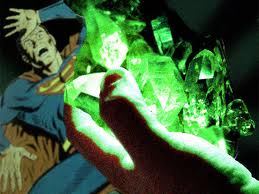
We used to cringe behind the couch when Lex Luthor hauled out that random sampling of Kryptonite and threw it in  Superman's face, and the Man of Steel would collapse in a quivering, helpless heap and become just another guy in Spandex with his tighties on the outside. Embarrassing.


Psst- hey, Stupid! You're supposed to get all weak, not eat the stuff!
 
 
There, that's better. Dude, you gotta stay consistent with these things.
 
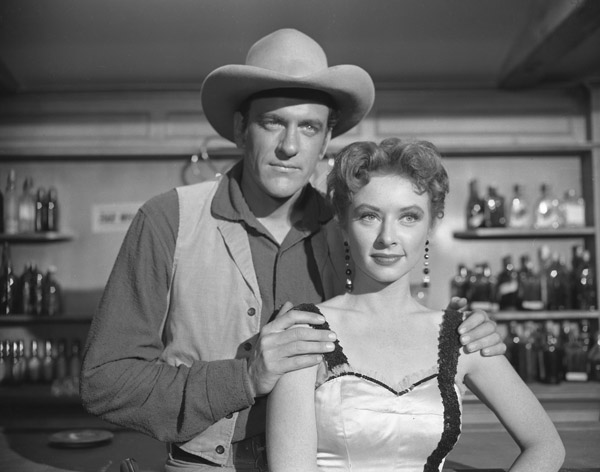
Now, as I was saying, we all looked u to Superman and those other heroes because, as heroes, they were pretty much impervious to character flaws. I mean, you never saw Clark Kent or Superman step over the line with Lois Lane. We all hoped Marshall Dillon and Miss Kitty were involved, but we never saw so much as a smooch. Or if there was, I missed that episode.
 
 
I mean, just look at that. Hands appropriately arrayed in a family-friendly way, the strong set in the jaw, Mr. Boy Scout all over.
 
Then the '70's hit, and Hollywood not only gave us heroes who were human, they gave us heroes who were bad guys. In short, they told us there were no heroes anymore. In Thunderbolt and Lightfoot, the characters are all about stealing a huge amount of money.


Another one was The Doberman Gang.
 
 
These movies are either bringing back memories, or bringing up lunch. Seriously, though, they're prime examples of the pendulum swinging the other way. I think it reached its opposite extreme sometime before 1980.
 
Then we started seeing heroes kind of come back, only sporting the scars of the '70's. The pendulum seemed to kind of center with films like Spacehunter, Molly Ringwald's debut in the trade


Okay, I can hear you now: "Where in the world does he come up with these oddball, obscure movies? Hey, I claim no normal upbringing. Most of you already know me if you've been following my latest interviews and blog posts, and there wasn't a whole lot of normal in my life. But it is what it is.
 
Anyway, back on task. Our heroes were heroes again, but they had flaws. They drank too much, or they were slobs, or they had a weakness for the opposite gender. In other words, they were human.
 
Which, I believe, was a good move. Because (Those taking notes, put a star here) I believe there are two types of heroes: Those who are born, and those who are made.
 
The first type is the one who naturally runs toward the screaming, the gunfire, the chaos. My youngest is like that. When all hell breaks loose, he is on the scene, whether he knows what to do or not. Prime example time.
 
When the kids were toddlers, my younger daughter got hold of a sharp knife from the table. I was doing dishes and it was waiting to be washed (What? You other men don't wash dishes once in a while? For shame!) Anyway, I turn around and there she is, holding this knife.
 
Now, as a dad, I need to not only get the knife from her, but I need her to understand why Daddy doesn't want her to wave a carving knife all over the kitchen. So I get it from her, and take her hand, just to show her the tip of the knife is sharp, when in comes a two-year-old blonde streak, and puts himself between me and my daughter. Seems he thought I was going to stab her. Holy cats. Lesson over. He's wrapped himself around her, screaming hysterically, and he has no idea why. He still does that. The best thing I can do for him is to teach him first aid and CPR. He's a natural born hero. I might as well teach him what to do once he gets there, than have him get in everyone's way.
 
Then there's the other hero. The one who's forged in the furnace of hardship. They're just normal folks, to whom running from the trouble is simply not an option. They're the mom who's kid is under the car. They are the teenaged boy whose neighbor in class is taken with a Grand Mal seizure. They are the young man or woman fresh from boot camp, in a far away land whose unit walks into an ambush.
 
In many cases, heroes are just people who are forced by circumstance to do heroic things because it's the only option that makes sense. You see it again and again on the news.
 
Which means heroes are regular folk. I look into the character of each of my heroes, and see how human they are. Jon treats NADIA like a piece of garbage for a while because he feels like his memories of Alicia are violated. Later on he falls into temptation with someone else. Not because he's an inherent ass. It's because he's a human male, and heroes who can overcome themselves as well as the bad guys, are the best heroes.

And God knows, we need more heroes today.
 
But those are just my own thoughts on the subject. What kind of heroes are your favorites, and why?